
S coma nair no àit' ar n-eung dhuinn 'S greadhnachas gun fheum ar tòrraidh. The time or place of our death doesn' t matter, since happiness doesn' t need a funeral. Bàrdachd Mhgr. Ailein. The Gaelic Poems of Fr Allan MacDonald. Transcribed, translated and published by John Lorne Campbell; 1965
Greyfriars Kirkyard, Edinburgh
Here snug in a grave my wife doth lie, She is at rest, and so am I, Who for beneath this stone doth rest Has joined the army oft he blest. The lord has taken her to the sky; The Saints rejoice, and so do I Tears cannot restore her, therefore I cry. Raymond Lamont-Brown:... Continue Reading →
the Gaelic element

In the late 18th century the element Strontium was discovered here, in Ardnamurchan in the tiny Scottish village Strontian, hence the name. The place-name is of Gaelic origin, Sròn an t-Sìthein, meaning nose or point of the fairy hill which makes the chemical element strontium the only one with a Scottish Gaelic etymology. It is therefore... Continue Reading →
Aberdeen Churchyard
Here lie the bones of Elisabeth Charlotte, Born a virgin, died a harlot. She was aye a virgin at seventeen, A remarkable thing in Aberdeen. Raymond Lamont-Brown: Scottish Epitaphs. Edinburgh, Chambers; 1990
the tiger that would not be buried in Brechin
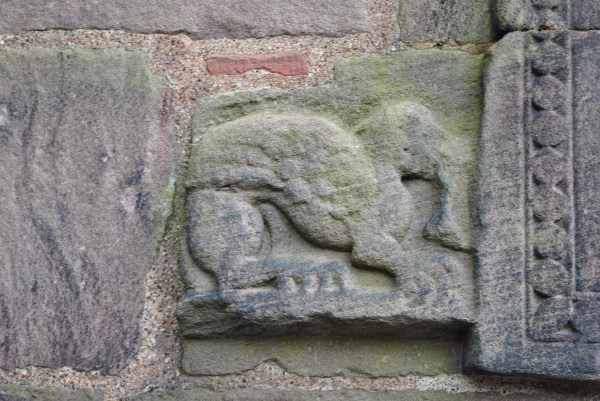
The Lindsays were a very popular family in the 15th century, influential with substantial property in Angus and the Mearns. For generations they were locked in a feud with the Ogilvies and their supporters. But the Lindsays had an even more powerful enemy – the King. tiger and king James II of Scotland was monarch... Continue Reading →
a bard’s quest for vengeance

Ian Lom - the poet who cut off the heads of seven murderers It is a long and gory story that emerges from this beautiful graveyard near Roy Bridge. Stunning scenery surrounds the ancient burial place and the remains of a 15th century Roman Catholic church, Cille Choirill, a spot as beautiful as it is... Continue Reading →
Lunna’s Norwegian connection

Place names of Shetland are almost all Norwegian in origin. Local boats descend from Viking built ships, Shetland belonged to Norway for centuries in the past. The Norwegian connection is strong. Particularly in Lunna churchyard. A tall building towers above the small graveyard by the edge of the sea. Lunna House dates back to 1663 and... Continue Reading →
And summer’s lease hath all too short a date

Shakespeare’s sonnet Shall I compare thee to a summer’s day? is all-encompassing, expressing love and evanescence, life and death. A more than apt poem for a beautiful graveyard on sunny Scottish summer’s day: Dervaig burial ground. And summer’s lease hath all too short a date The temptation of monochrome is easily desisted... Continue Reading →
grave of a teenage hero
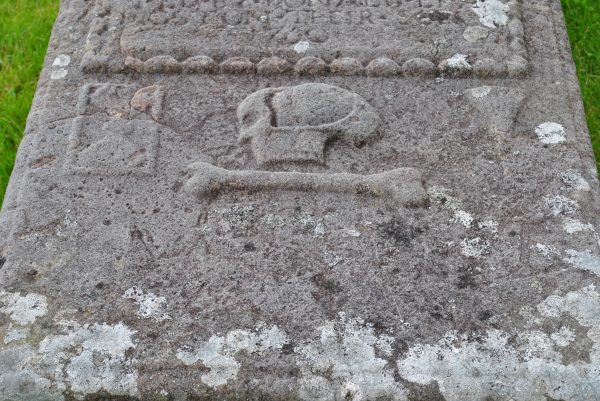
In 1746 the 18-year old Donald Livingstone (Domnhull Molach) rescued the Stewart of Appin regimental banner at the Battle of Culloden and lived to tell the tale. Even though he was shot various times. The Livingstones weren’t the traditional standard bearers for the Stewarts of Appin. That honour belonged to Carmichaels and was passed down... Continue Reading →
Clava Cairns

This is certainly one of the oldest cemeteries in Scotland. People buried their dead here for 4000 years and the markers of these tombs remain to this day, like headstones on a contemporary cemetery. A reminder of a distant and little known past. sacred site These Bronze Age graves near Inverness are amongst the best... Continue Reading →


 Graveyards of Scotland
Recent Comments