

Hidden among the windswept peatlands and heathery moorlands of the Isle of Arran lies a place that feels older than memory: Machrie Moor. Scattered across this haunting landscape are the remains of ancient stone circles – monuments of mystery, aligned with no obvious pattern, half-buried in bog and time. But if you stop and listen, you might hear what locals once called “The Moor of the Stone-Ghosts.”
The Gaelic name Sliabh nan Carragh is commonly translated as “The Moor of the Standing Stones”. A fitting description, perhaps – and yet it feels curiously inadequate. As Thorbjorn Campbell suggests in A History of Arran, the name might echo something far older, and far stranger. Could Carragh be related to the Breton Korrigan – the mischievous, ghostlike spirits said to haunt stone alignments in Brittany? If so, Sliabh nan Carragh might more accurately whisper: “The Moor of the Stone-Ghosts.”

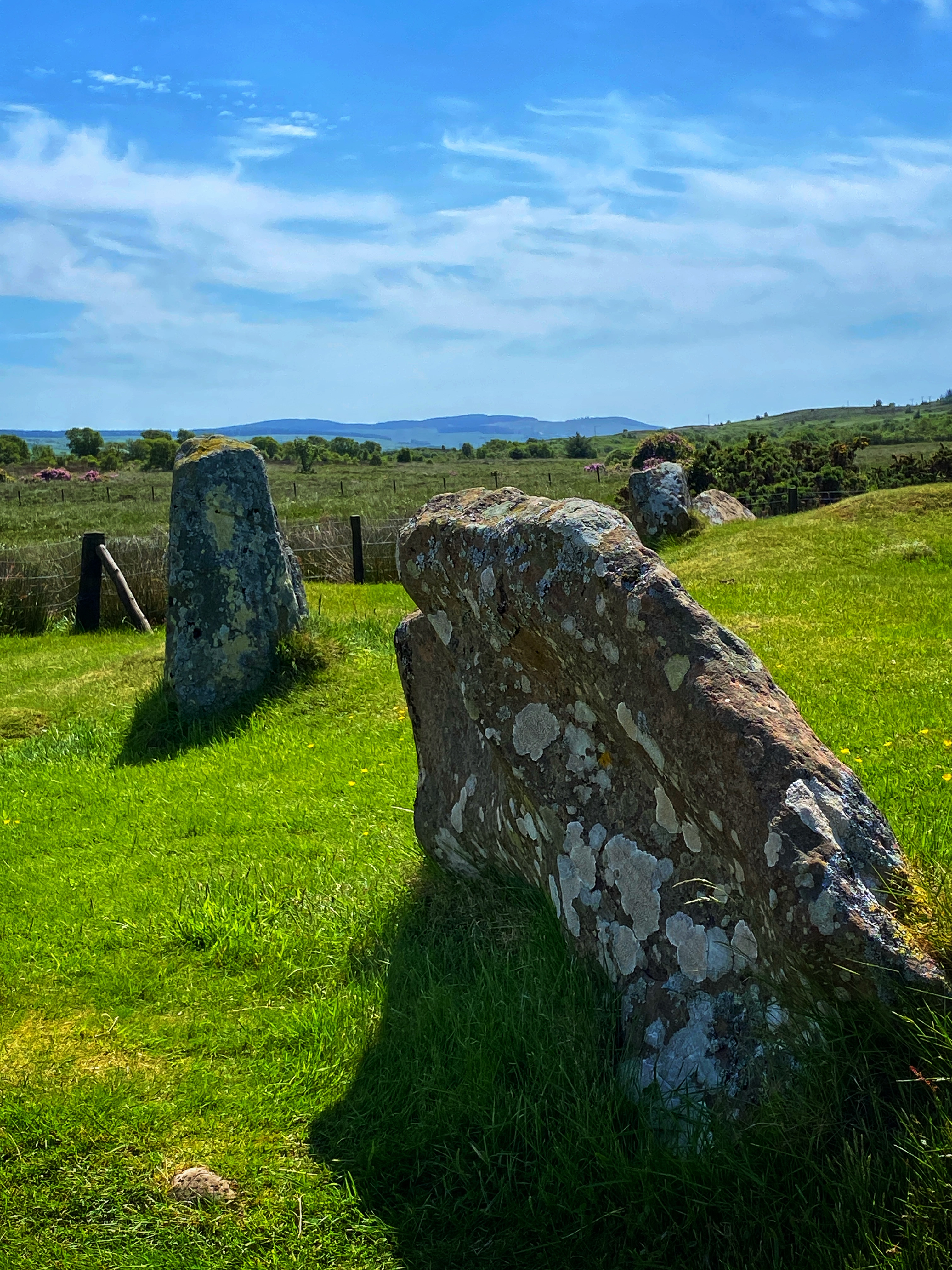
This eerie interpretation suits the site far too well. There’s a palpable silence in Machrie Moor, broken only by wind and curlew cries. The tall sandstone pillars cast long shadows in the low northern sun, standing guard over a forgotten past. Once, these rings may have marked sacred ground – a burial site, a gathering place, or a portal between worlds.
What makes Machrie Moor truly unique is the sheer number of stone settings within a relatively small area. At least six circles lie within sight of each other, many now partially swallowed by peat. The proximity of these monuments suggests a significance that goes beyond the ritual or the practical. There’s a presence here – not just of archaeology, but of something more elusive. Something watching.
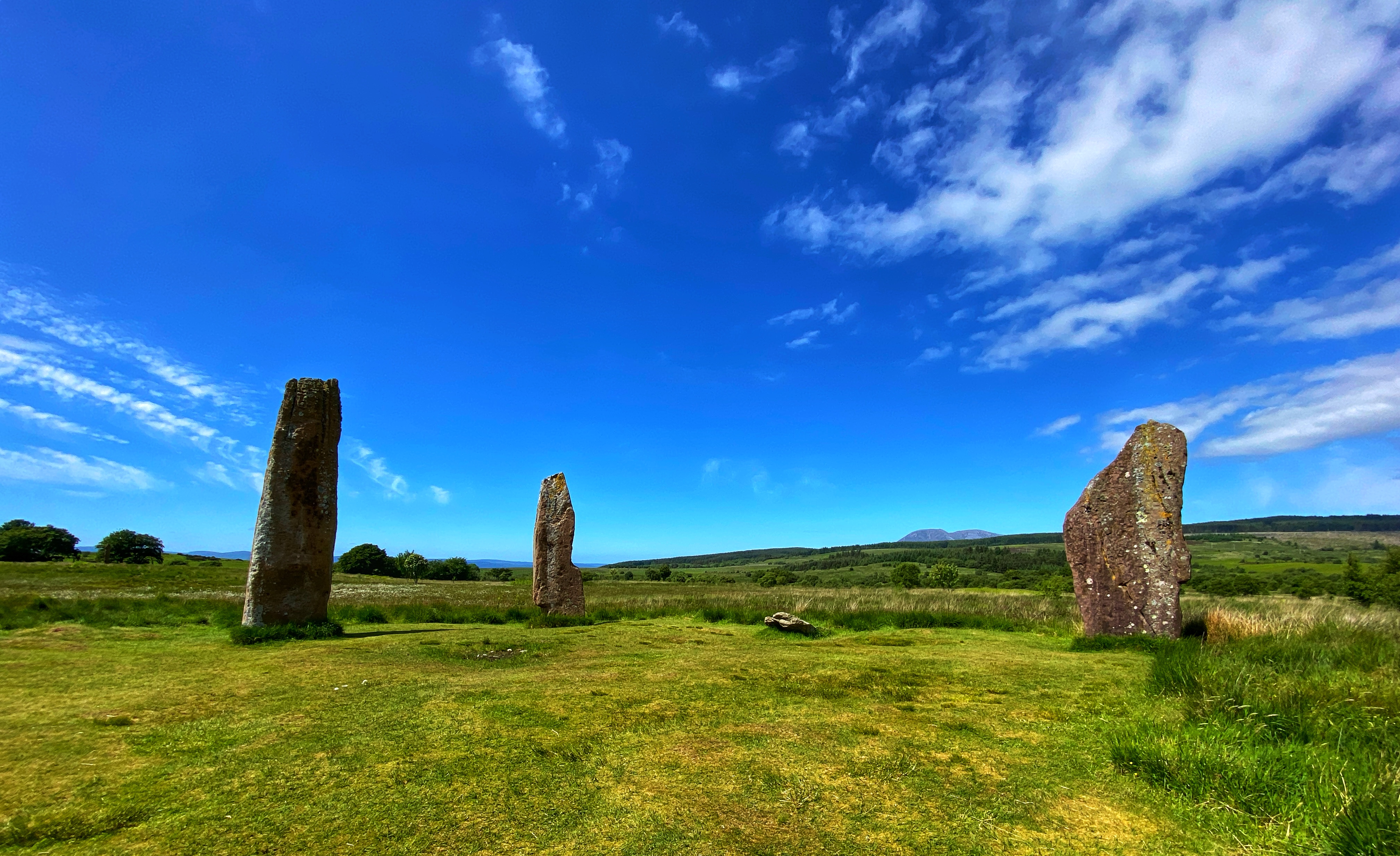
The Victorians, ever curious and often clumsy, began their excavations in earnest in the 19th century. Some stones were toppled, others documented, many disturbed. But the moor held onto its secrets. Unlike so many sites that faded with time, Machrie endured – perhaps because the locals knew better than to stray too far into its mystery.
And perhaps that’s the true magic of The Moor of the Stone-Ghosts: it endures. Like the Goatfell murder of 1889 – another enigma of Arran’s past – Machrie Moor stands as a silent testament to what we’ve lost, what we still fear, and what we may never fully understand.
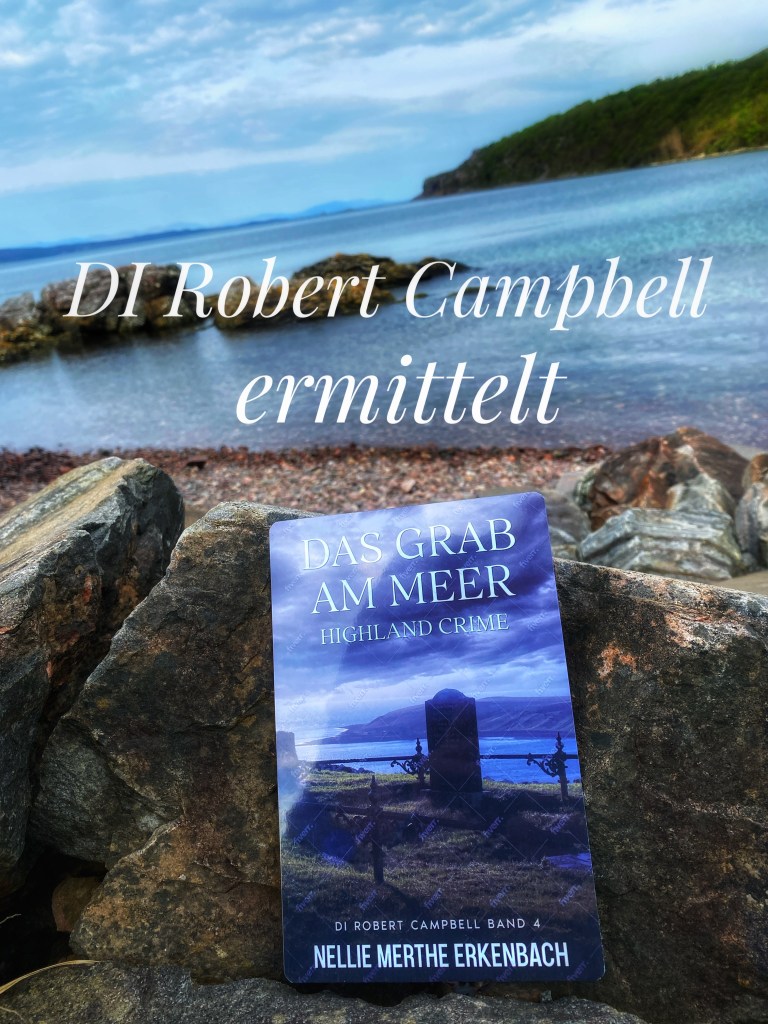
In fact, Machrie Moor plays a crucial role in my latest Highland Crime novel, “Das Grab am Meer.” The moody landscape becomes more than just a backdrop – it becomes a character in its own right, shaping the pace of the investigation and reflecting the shadows that haunt both past and present. Secrets buried in peat, whispers on the wind – and a truth that refuses to stay hidden.
📍If you’re visiting Arran…
Take the track from the A841 near Auchencar and walk inland. You’ll cross a wooden footbridge, pass through sheep fields, and enter the moor itself. Take your time. Watch the light. Feel the hush.


 Graveyards of Scotland
Leave a comment