This is a tale about a chapel, a saint and a bishop and rather surprisingly in that context, a tale about destruction, castration and a proud heart. The Isle of Skye at its wildest! The tale unfolds on graveyard on a small island in the river Snizort , just a few miles off Portree, and... Continue Reading →
Rhynie’s Gothic grave and sarcophagus
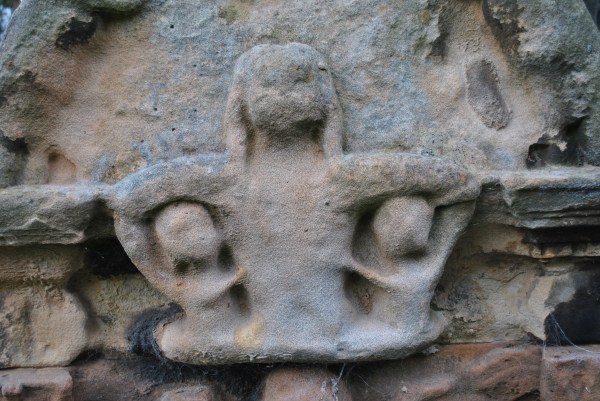
Rhynie is first and foremost known for its Pictish symbol stones, on display next to the graveyard in the adjacent car park under an open wooden construction. The graveyard itself is old, too. The place-name Rhynie or sometimes also spelled Rhyny derives either from the French word roinneau, meaning a small promontory or from the word rig, meaning... Continue Reading →
death to the princess and her unborn child
Many cruel and misogynist tale has been told from the past ages. The story of Theneu seems particularly cruel. A father trying to kill his pregnant daughter. He fails, tries another way and she ends up giving birth alone on a boat in the North Sea. Usually, the story focuses either o the father, because he was Loth, a powerful king. Or on the son she bore, who became a famous saint: St Kentigern of Glasgow.
Bane, bone and stone
This is a graveyard well worth visiting, because of the view of the Sound of Gigha, because of the abundance of beautiful old headstones and because this is an ancient place of worship, established 800 years ago in 1222. A few years later Alexander II gave it to the bishoprick of Argyll.
The Gaelic Chapel – an ambiguous gesture
It is an impressive ruin, a reminder of Cromarty's past and the people that lived in it. There are others in Scotland, one in Glasgow and one in Aberdeen, all built for the Gaelic speaking community that had arrived in these places after being cleared out of their Highland homes. They were Gaelic speakers and found themselves in places where Gaelic wasn't spoken. The Gaelic Chapel was a kind gesture to the Gaelic speaking Highlanders who had come to Cromarty. It was financed by exploiting people and nature in the colonies. However, it did not last long and is now a ruin.
the minister’s grave
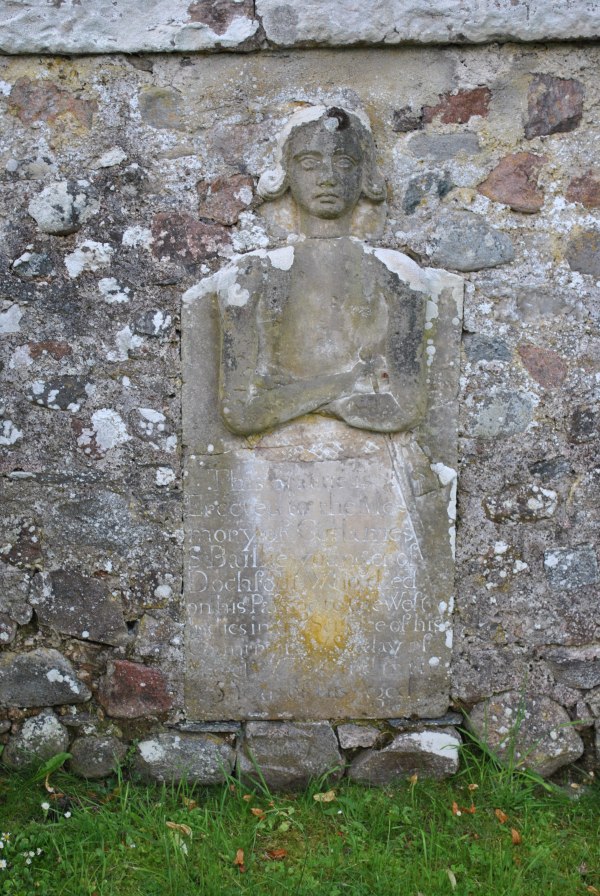
Reverend Donald MacInnis was the third minister to serve in Glenmoriston after the Disruption for eleven years, from 1879 until his death on September 24th 188. The two men before him also had the charge of the Free church in Fort Augustus, where they lived. Donald MacInnis was a Glenmoriston man and he would... Continue Reading →
the Burns connection
The Church of Crosbie has a very special connection with the poet Robert Burns. Its roof collapsed on the stormy January night of 1759, in which the poet was born. Crosbie is just under 40 miles away from Alloway. The ruin was never rebuilt and has now been made inaccessible. Unfortunately, the entire cemetery is... Continue Reading →
Celtic Christianity
The Old Church of Bona in Kirkton, south of Inverness. A much older church once stood here, no traces are left. The existing church is now used as a private residence. The burial ground is known as Cladh Uradain and is at least 300 years old. It is still in use today. Here was the... Continue Reading →
to live among the dead
What do you think when you look at Kirkmichael? A place of worship, prayers, peace, memory, and community? Or do you think large kitchen-diner, open living space, and lots of character? As an estate agent would put it: the answer to your prayers? Kirkmichael is not one of the prettiest churches in Scotland but it... Continue Reading →
bleedy pits
It was at the beginning of the last millennium, the Danes were still threatening the Scottish coast, and the clanchiefs were busy fighting off invaders after invaders. In 1004, the Danes invaded Banffshire and were received with horror as well as courage by the locals. There were not many places along the coast where a... Continue Reading →


Recent Comments