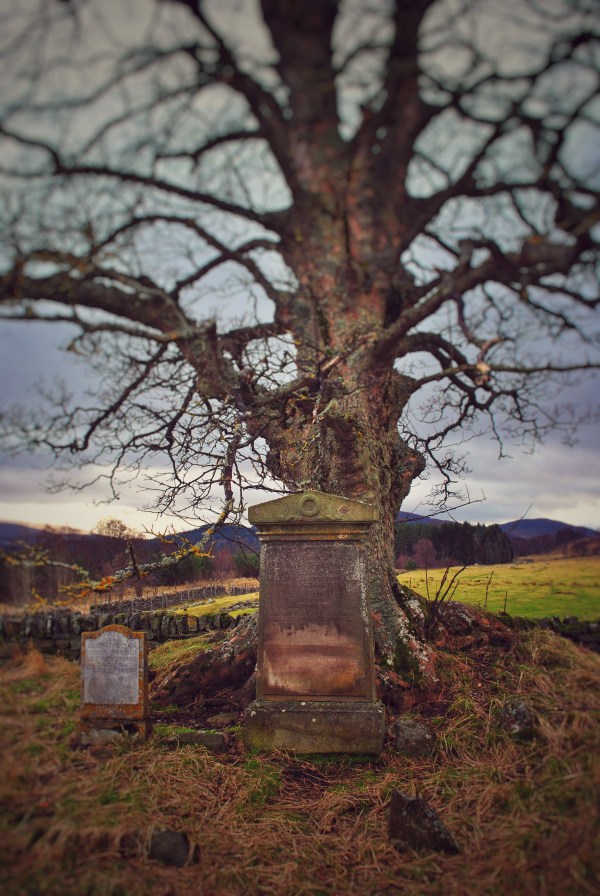
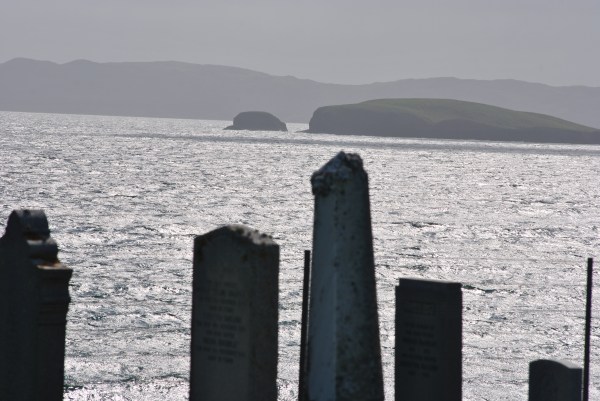
On the Isle of Lewis the graves seem shallow and sandy. The cemeteries are often situated close to the sea and sand seems to be more common than earth for a funeral plot. There are regulations of course, coffins are obligatory and once interred they must be covered by at least 3 feet (91cm) of... Continue Reading →
the disemboweled judge
The clan Morrison was strong on the Isle of Lewis, mainly in the area around Ness and Barvas. They held the hereditary office of brieve, meaning they were the judges in the area; a station of absolute power but not always absolute integrity. One John Morrison, brieve of Lewis, had come to the conclusion that... Continue Reading →
death by pownie
Here lies a man o' micht, His name was Donald Downie: He lost his life ae market nicht By fa'in aff his pownie. Aged 37 years Cullen Graveyard, Banffshire Raymond Lamont-Brown: Scottish Epitaphs. Chambers, Edinburgh,1990
silent watch
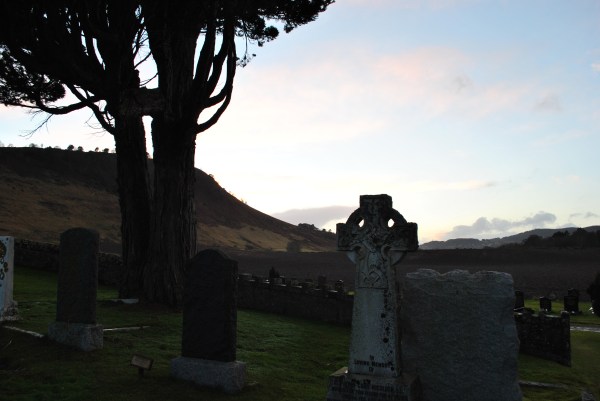
Beneath Craig Dhu, which to the clouds doth rise, Beside the Spey, a grassy graveyard lies. The great grey hill its silent watch doth keep O'er those lying in their last long sleep. Many men of the pen and of the sword came out of Badenoch, a history of battles fought and lost; great Clan... Continue Reading →
smoked out
smoked out One day, long in the past, sometime between the end of the 16th and beginning of the 17th century, the Morrisons of Ness were resting in the mighty Dun Carloway, cattle grazing peacefully outside. It was summer and the days were long, birdsong filled the air. But peace was evanescent and this was... Continue Reading →
an axe wound, mass murder and lust
St Clement’s church, Rodel, Isle of Harris St Clement’s was built as a catholic church under David I, probably by one of the MacLeods of Harris but falling into disuse soon after completion. The Reformation had put an end to Catholicism on the island. It had most likely been a priory, two allegedly excisted on... Continue Reading →
the mourning parents
Our sons they sleep down in this grave, We will not weep to wake them; We will wait till death do come, And we will overtake them. Kelton graveyard Raymond Lamont-Brown: Scottish Epitaphs. Chambers, Edinburgh,1990
The Fife Adventurers
Towards the end of the 16th century, the Isle of Lewis was a wild, unruly, unhealthy and recalcitrant place. At least according to its King, James VI. It might have been quite a few of these things but educating his people was not what was really on the King’s mind when he took measures to... Continue Reading →
cursed spirits
In Fodderty people have lived since the earliest times. The remains of a Pictish hill-fort on a ridge next to the graveyard are still visible for those who are energetic enough to climb the crag called Knock Farrill. Nothing much is left to be seen but remains of walls and ditches, there definitely were look-out... Continue Reading →
Exploring Iona: Scotland’s Holy Island of Kings
Iona, a beautiful island in the Ross of Mull, is notable for being the burial place of Scottish kings and the birthplace of Christianity in Scotland. Founded by St. Columba in 563, Iona symbolizes peace and purity. Despite the destruction of many Celtic crosses, the island remains historically significant for its monastic legacy and royal history.


Recent Comments