


It was a cold, overcast morning in early October 1942. Few men remained in the village of Lower Breakish. The war weighed heavily on the people of Skye. They did not know what might be waiting for them on the island’s shores – or what they themselves would soon have to face.
Warships moved through the waters around Skye, while transport vessels carried troops towards their destinations. Across Britain, preparations for the eventual Allied invasion of occupied Europe were gathering pace.

RMS Queen Mary was carrying around 15,000 American troops to Britain. Together with her escort vessel, HMS Curacoa, she had reached the waters west of Ireland. The clouds hung low over the sea.
Around midday, the two ships suddenly collided. The Queen Mary struck the much smaller Curacoa amidships, virtually slicing her in two. The warship sank within minutes.
An eyewitness account of the disaster can be found here:
http://www.bbc.co.uk/history/ww2peopleswar/stories/28/a4146428.shtml
The Queen Mary was under strict orders not to stop, even to rescue survivors, because of the risk of attack by German U-boats. She continued on her course, leaving the men of the Curacoa behind in the cold Atlantic.
Most of them did not survive.
The British government imposed strict secrecy on the disaster, fearing that news of it could damage wartime morale.

The bodies of men from HMS Curacoa were washed ashore along the coasts of Ireland, Eigg, Oban, Knoydart and the Isle of Skye. Of the 439 men aboard Curacoa, only 101 survived. They were rescued from the sea by other vessels. On Skye, 17 of the dead were laid to rest in Ashaig Cemetery. Three of them were never identified.
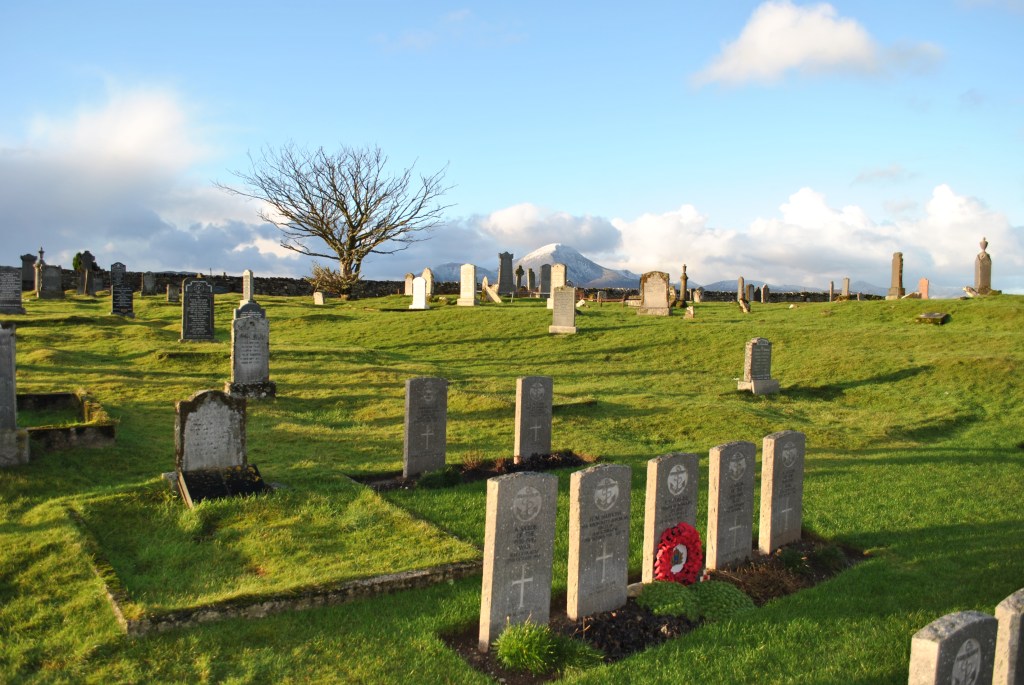
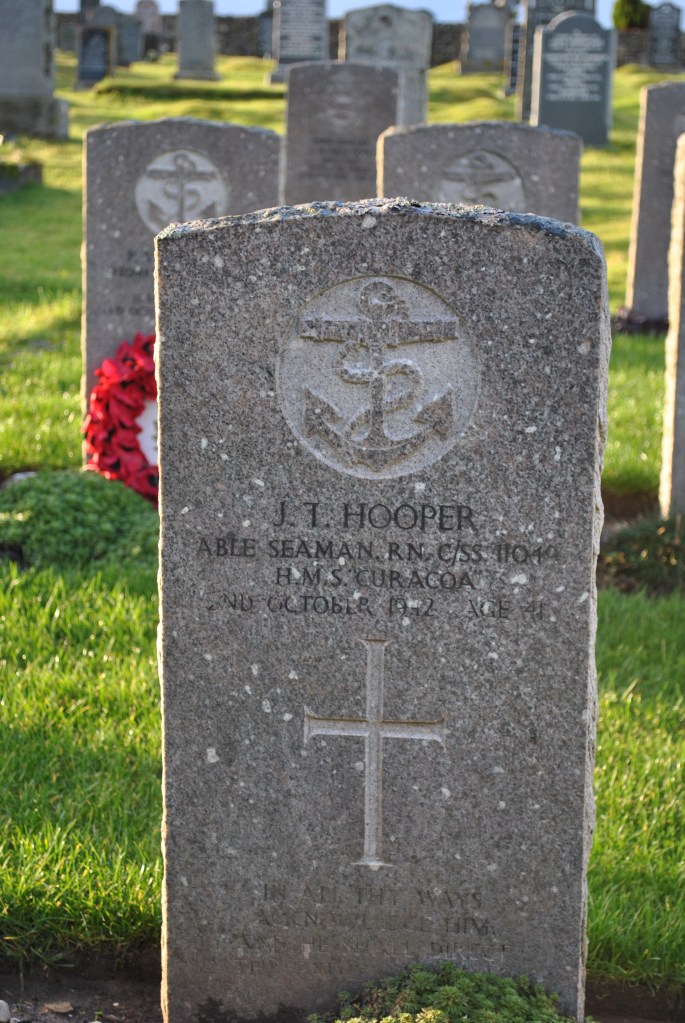
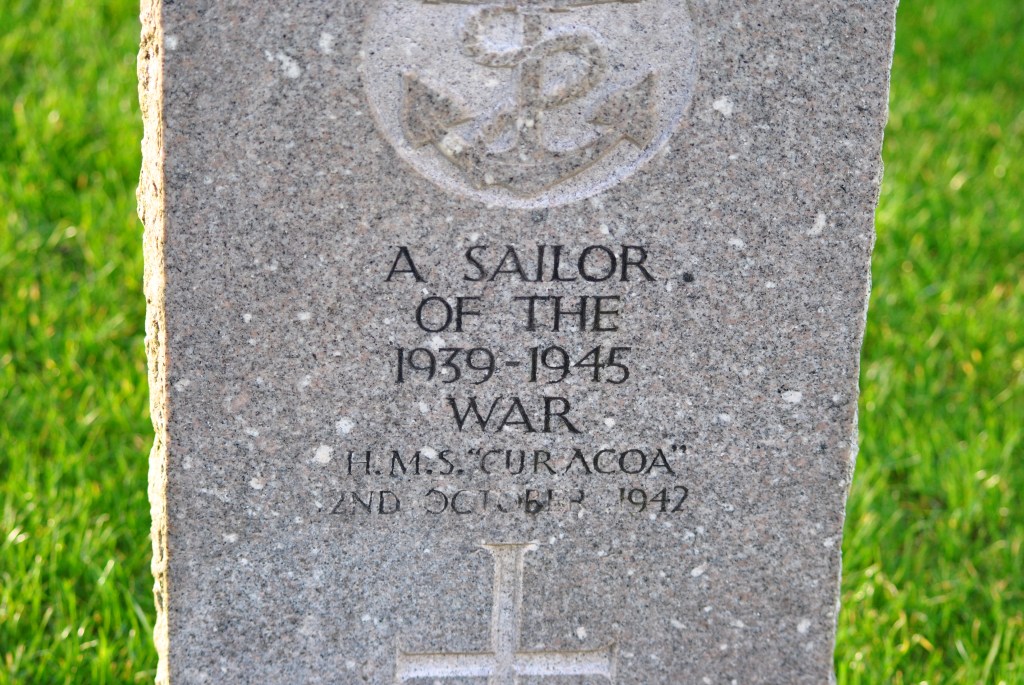
The headstones marking their final resting places face away from the sea in which they died.
Most of the other graves in Ashaig Cemetery face towards it.

Enjoyed this story?
You’ll find many more strange, fascinating, funny and sometimes dark tales from Scotland’s past in my book Scotland for Quiet Moments. Collected over years of researching Graveyards of Scotland – often with the help of wonderfully peculiar 18th- and 19th-century travel books – these are stories of murderers and poets, fairies and wolves, forgotten places, famous Scots and people history has almost left behind.
Not every story takes place in a graveyard. But somehow, they all seem to end in one.
Discover Scotland for Quiet Moments here: https://amzn.eu/d/0cnLMvWw


That’s so touching that their headstones face away from the sea! It’s such a subtle thing that I’m glad you noticed it.
Yes, I felt the same. The things a grave can tell you when you take the time to actually “see” it.
Lovely post, I found it researching one of my own I’m writing about the holy well beside this graveyard!
Thanks, I never knew there was a holy well there. I will check your blog to find out more about it.
I have often wondered if my uncle Robert Delamaine was amongst the those that were washed up and subsequently given a christian burial.
If he was, he rests in a truly beautiful place.
You could try the Commonwealth War Graves Commission. My uncle was aboard the Curacoa and they located his grave near Arisaig, near Fort William.