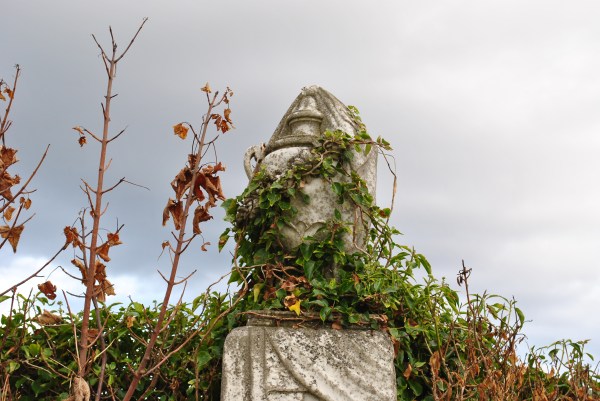
It is not unusual, to find a Scottish graveyard locked up overnight, especially in city centres. Too much damage and destruction has happened in the past and is still happening today. Vandals causing even more grief for the families of the deceased by damaging ground and headstones alike. Drug and alcohol use are also frequent problems on graveyards in urban environments. Historical churchyards are often locked by the councils and taphophiles will often try in vain to gain access. Locking them up of course often seems feasible, after all, there is no need to visit a churchyard for example at night.
never green and no mondays
nd had crossed the Ord, the southern border of their country, on a Monday, it was from now on an unwritten law that no Sinclair should wear green or possess the stupidity to cross the border on a Monday.
brothers, lies and tartan revival
Here he lies, the alleged grandson of a king and not just any king, the famous, romantic, tragic so called Pretender - Charles Edward Stuart. This is the grave of John Sobieski Stuart also known as “The Chevalier”, both names weren’t real, you could indeed call them his stage names because he went into the... Continue Reading →
Dunino’s pagan past
Dunino church is ancient and has been an ancient place of worship. In the long past days of old Celtic faith, a stone circle marked forgotten rites. It was, as have been many Celtic customs, incorporated into the church. But there are more traces of the past to be found here and more intriguing ones at that.
rock without a grave 
The famous Bass Rock is a small island that sits like a monstrous stone about a mile off the East Lothian coast, a tourist attraction at the beginning of the last century, but the steamer only went out when the weather was good; high winds made it impossible to moor at the small island’s only jetty. This mountain of stone in the sea is impressive. It is populated by thousands of gannets, which were once a part of the region’s diet. A Stevenson lighthouse seems to cling to the steep wall, ruins of an ancient residence crumble in the middle of the rock. Nothing grows here except loneliness.
The Battle of Prestonpans
Scottish battles, like many other battles, scarred the nation’s memory for a number of reasons: many losses suffered on one or both sides, the exploits of individuals, or the length of time they raged. Prestonpans was one of the shortest battles in Scottish history, lasting just under ten minutes.
a rite, roasting a cat and a warrior chief
been told with a focus on facts and intention of making sense of the gruesome details.
The Gaelic Chapel – an ambiguous gesture
It is an impressive ruin, a reminder of Cromarty's past and the people that lived in it. There are others in Scotland, one in Glasgow and one in Aberdeen, all built for the Gaelic speaking community that had arrived in these places after being cleared out of their Highland homes. They were Gaelic speakers and found themselves in places where Gaelic wasn't spoken. The Gaelic Chapel was a kind gesture to the Gaelic speaking Highlanders who had come to Cromarty. It was financed by exploiting people and nature in the colonies. However, it did not last long and is now a ruin.
a traditional Highland funeral
Christina Cochran Blacklock’s funeral was the last traditional Highland funeral in the Kingairloch district. On Christmas Day 1924, Christina Cochran, nee Blacklock, died in Fort William at the age of 82. She had survived her husband, master mariner Alexander Cochran, her daughter Helen and her son James Duncan. Her granddaughter died a few years after the grandmother. Her grandson, Rev Henry Dyall, did not attend the funeral, but he had often heard the accounts of family and neighbours.
the killer lady’s missing husband
Lochaber has many graveyards to offer, quite a number of them are private burial grounds, that belong to some landlord or other, as is the case with „The Field of the Church“, Dail na Cille. This one and the landlord that once owned it, are particularly interesting.


Recent Comments