Machrie Moor, located on the Isle of Arran, features ancient stone circles steeped in mystery and folklore. Known in Gaelic as "The Moor of the Standing Stones," it evokes eerie connections to ghostly spirits. The site endures numerous excavations, symbolizing forgotten pasts and hidden secrets that echo throughout the landscape, enriching narratives such as in "Das Grab am Meer."
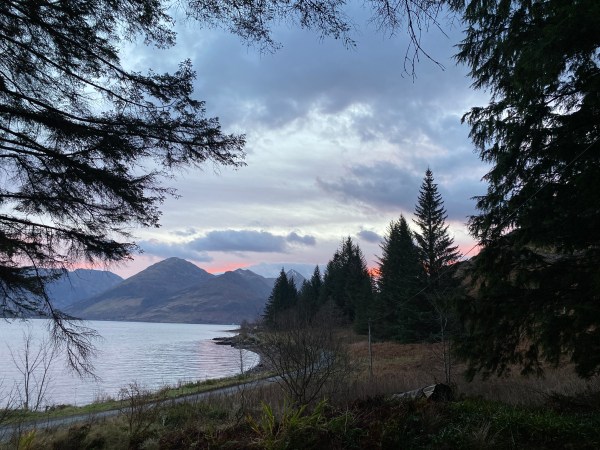
Rediscovering St. Kentigerna: The Hidden History of Saraig and Loch Duich
The rediscovery of St. Kentigerna’s burial site and the nearby connections to St. Fillan would offer a unique opportunity to reconnect Loch Duich with its rich spiritual heritage. These saints were more than historical figures—they embodied the early Christian spirit that shaped the Highlands. If you have any leads, memories, or photographs that could aid in locating the graveyard, please share them. Together, we may rediscover and preserve an essential chapter of Scotland’s past, honouring the legacy that still resonates along the northern and southern shores of Loch Duich.
sailors, popes and suffragettes
This place is so absolutely not what it looks like and bears far more depth, surprises and secrets than most of the graveyards I have been to in Scotland. And believe me, I have been to a lot.
the lion’s wife
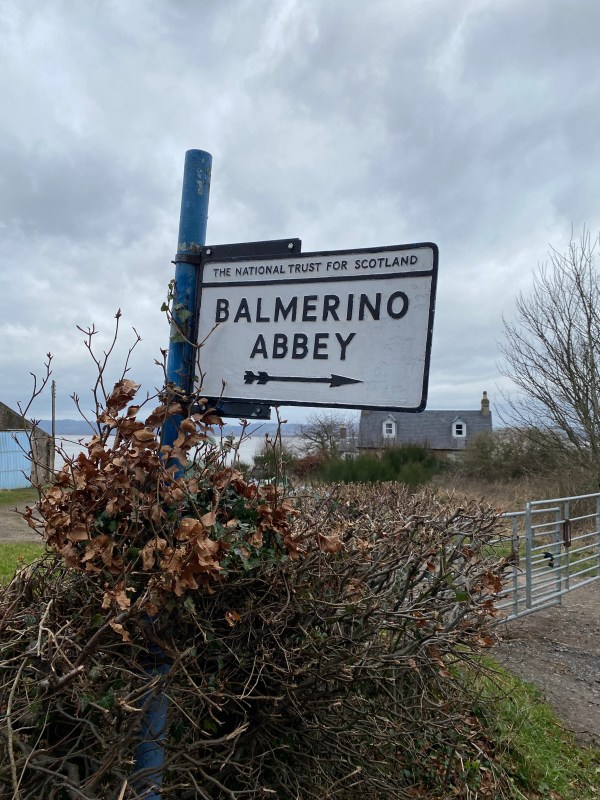
Balmerino Abbey was founded by a woman who is believed to be buried here: Queen Ermengarde de Beaumont, not a “normal” woman by any standards. The Abbey is in a bad state and there is not much left of its original power and impressive architecture, nothing but the faint memory of people and their stories in a long gone past. Ermengarde was born in 1170 and died in her early sixties, a long life in the 12th century. She was married to King William I of Scotland at the age of 16. The marriage took place in England, Henry II was overlord of Scotland at the time. Her husband had been a notorious womaniser before his marriage but was said to have been faithful to his extraordinary woman and wife ever since the marriage vows. Her husband founded an Abbey in Arbroath where about 14 years later he was laid to rest. Ermengarde, who survived her husband by 20 years, was not buried next to him, but here, in her Abbey, in Balmerino.

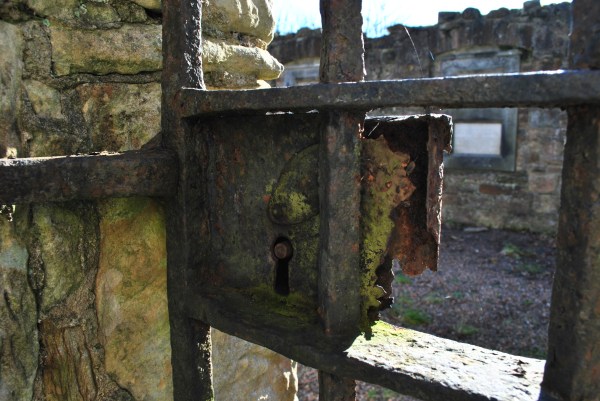
ancient fragments in the walls
This place is beautiful, serene and not easy to find. There is a field to cross to get there. You’ll feel the ancient magic of this graveyard once you open the gate. The ruin of the chapel itself remains locked, though. #graveyard #Scotland #Abercrombie
the disappearance of the last baronet
the issue with the issue The descendants of Sir James continued to possess property in the area for centuries but by the 19th century the family was entirely extinct in the male line. This was even more remarkable, as Sir Michael lived to see 300 of his own issue, while Sir Andrew, his youngest son, saw 600 descendants from his father. In the aisle of the old church of Abdie, there are mural tablets, erected to the memory of Sir James Balfour, and his father Sir Michael; and here, or in the adjoining churchyard, they were both interred.
The Mason’s Mausoleum
The austere pyramid is an unusual sight and certainly an uncommon style for am mausoleum in Scotland. The reason being not an architectural fancy or fashion but the stong faith of its creator - Francis Wemyss Charteris was a Freemason The mausoleum was built between 1795 and 1798. Thomas Harrison of Lancaster assisted. It was a precicely thought through built. The look of simplicity is devceiving, there is more to it than meets the eye. Tributes have been paid to Masonic symbology, numerology and geometry. Here are just a few examples.


Recent Comments