


Along the shores of Loch Duich in the Highlands lies a forgotten piece of Scottish history. Near the modern-day burial ground Ard Dearg in Saraig are believed to be the remains of a graveyard and a chapel once dedicated to St. Kentigerna, a revered figure from early Scottish Christianity. Though her exact burial site has been lost over centuries, this hidden graveyard holds deep significance, linking the area’s past with the legacy of a saint whose life touched the Highlands.
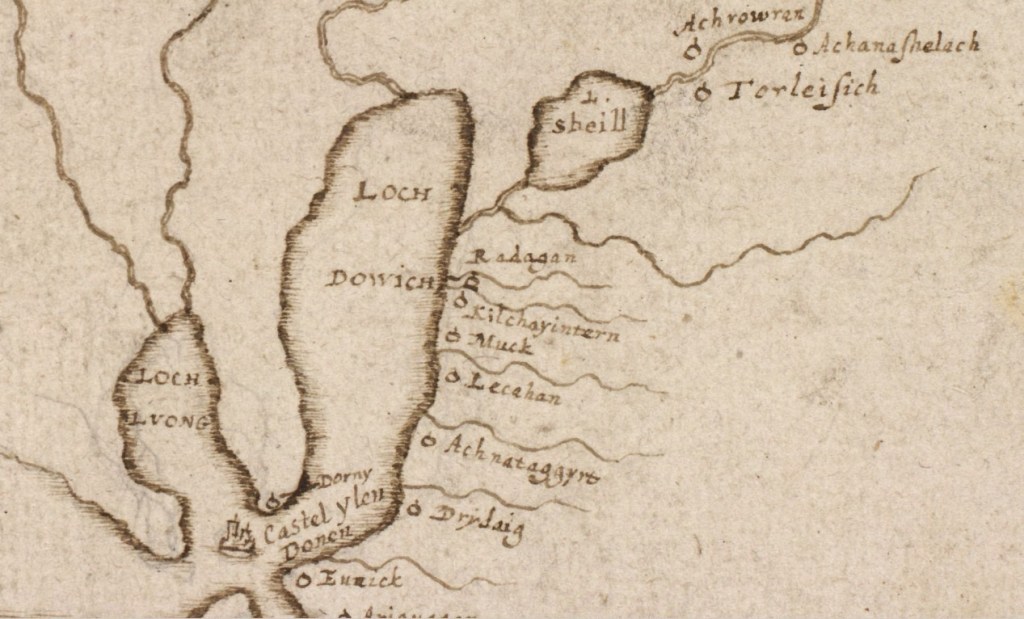
Who Was St. Kentigerna?
St. Kentigerna, originally an Irish princess, chose a life of faith over royalty. After being widowed, she came to Scotland with her son, St. Fillan, and her brother, St. Comgan, spreading Christianity in areas where pagan beliefs were still prevalent. Known for her devotion, Kentigerna eventually found seclusion on Inchcailloch, an island in Loch Lomond, but her influence extended well beyond. In particular, a chapel on the shores of Loch Duich, known as Cill a’ Chaoin-tearn, was dedicated to her memory, though the exact site has since faded from view. The remains are hidden underground somewhere close to the modern graveyard in Saraig. But where?
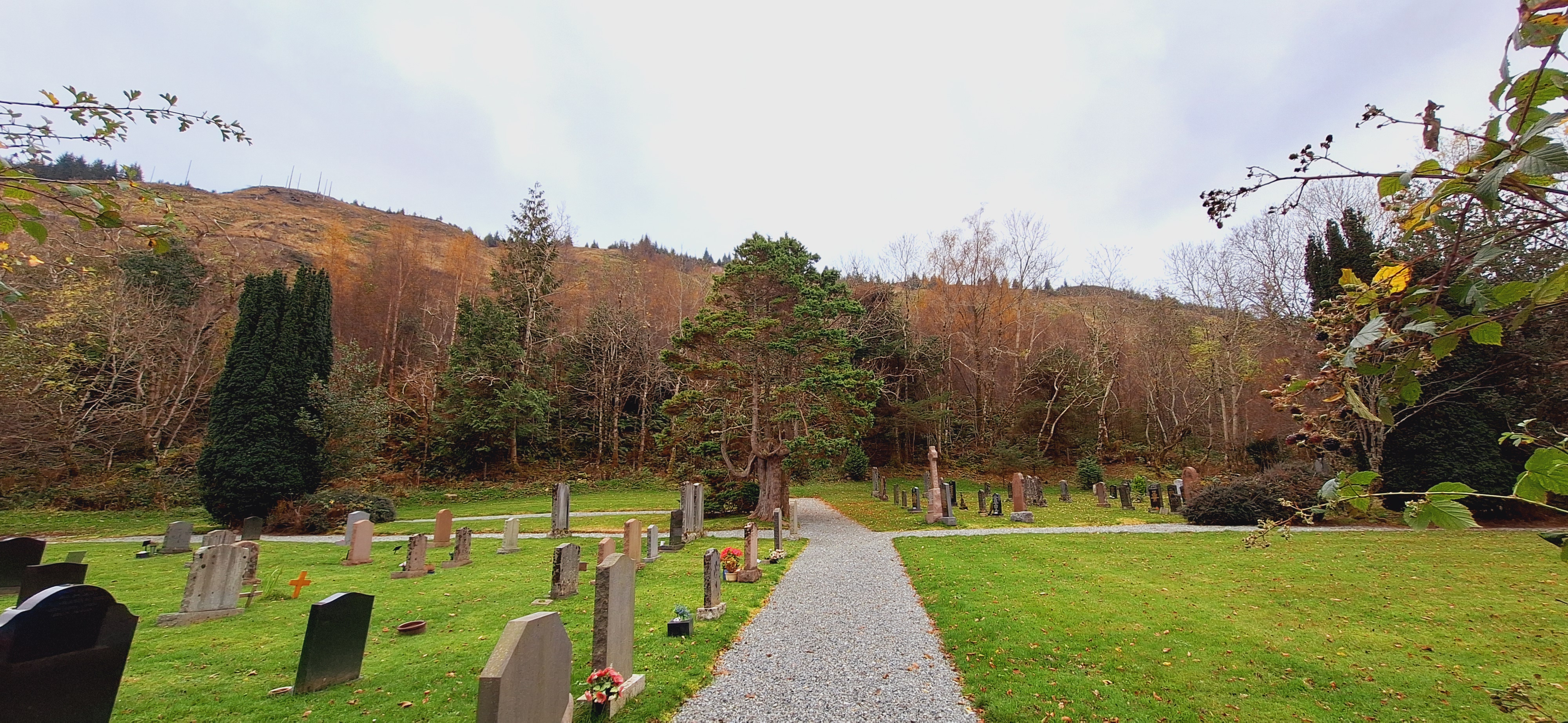


NG 9064 2088 Enclosure – This is clearly visible as a square enclosure on the aerial photograph, but is on steep and rocky ground and is unlikely to have contained a chapel and burials. It measures 8.5m. square, aligned NNE-SSW, with a possible extension turf dyke towards the shore. It is approximately 20m. up from the road.
Highlife Highland Archive Service pointed out the following references:
“Prehistory is followed by a mixture of history and legend associated with the saints of the Christian faith. In the twilight of Celtic sovereignty, there are glimpses of these pilgrims visiting, sojourning and settling in this region. Kentigern, St. Comgan, and St. Fillan are commemorated in Cill Chaointighearn on Loch Duich, Killilan in Kintail, and Cilchoman in Lochalsh. Loch Duich takes its name from St. Duthus (associated also with Tain) and Eilean Donan from St. Donan who was martyryed on the island of Eigg in 617 A.D.”
(3rd Statistical Account of Scotland provided by HLH Culture & Learning)
“The expulsion of Congan from his kingdom led also to that of his sister and her sons. Accordingly Congan, with Kentigerna and her son Fillan, and seven clerks, betook themselves to Lochelch, where they led a severe life. After the death of his uncle, St Fillan built a church in his honour, and buried him in lona.”‘ Among other hils recalling St Congan may be mentioned Kilchoan in Kiltearn parish; Kilchoan in Knoydart; Kilchoan in Ardnamurchan, where the ruins of the ancient church stand on the bank of a small stream flowing into Kilchoan Bay; Kilchoan in Kilbrandon and Kilchattan parish; and Kilchonan in the Braes of Rannoch, where the burying-ground of St Congan’s church remains, though the church has vanished.
Three islands in Loch Lomond fall to be noticed—viz., Inchmurrin, Inchcailleach, and Inch- ta- Vannoch. (…) Inchcailleach, in Buchanan parish, was once itself a parish. It means the Island of the Nun—viz., St Kentigerna, sister of St Congan and mother of St Fillan of Strathdochart, who made the island her retreat during the later years of her life, and died there in 734. Its ancient church was dedicated to her.”
(James Murray Mackinlay, Influence of the Pre-Reformation Church On Scottish Place-Names, Legare Street Press , 1904)
The quotes underscore the rich spiritual legacy of St. Kentigerna and her profound influence on Scotland’s early Christian heritage. Equally significant is the legacy of Cill Chaointighearn on Loch Duich. The lost church of Kentigerna serves as a sacred marker of her influence in the Highlands. With its ties to Celtic Christianity and the saints who shaped early Scottish faith, Cill Chaointighearn embodies the blending of legend, history, and devotion. It underscores the enduring presence of saints like Kentigerna, St. Comgan, and St. Fillan in the region, reflecting their journeys, struggles, and impact on local spiritual life.
Both Inchcailloch and Cill Chaointighearn stand as vital pieces of Scotland’s Christian landscape, symbolizing not only the faith of its early inhabitants but also the way these holy figures continue to shape the cultural and spiritual identity of the Highlands. Their stories invite reflection on the profound legacy of sanctity and pilgrimage that defines the region.
St. Fillan’s Influence on Loch Duich
Kentigerna’s legacy continued through her son, St. Fillan, who also played a vital role in spreading Christianity throughout the Highlands. Fillan is particularly celebrated for his healing miracles and the hermit lifestyle he embraced later in life. Like his mother, he moved to Scotland to preach, and his presence is felt on the other side of Loch Duich, around the area near Killilan. You will find more about him in the post the snake, the saint, and the power of healing

The Hidden Chapel and Graveyard
Local lore places St. Fillan near Loch Duich, particularly along its northern shores, where he was known to seek solitude and reflection. This connection to the Killilan area adds another layer to Loch Duich’s spiritual history, as Fillan continued his mother’s mission, founding small places of worship and influencing the Christian faith in the region. But where is her chapel?
Historical records suggest that Kentigerna’s chapel known as Cill a’ Chaoin-tearn, may be located near the current graveyard on the south side of Loch Duich, specifically in a flat area between the modern burial ground and Ard-an-eoin. The last known burial occurred around 1870 (Canmore). Despite investigations, no physical remains of the old chapel or graveyard have yet been conclusively identified, but traces of its location may still lie hidden among the trees and rugged terrain. There is only one plot that fits the description in the documents.
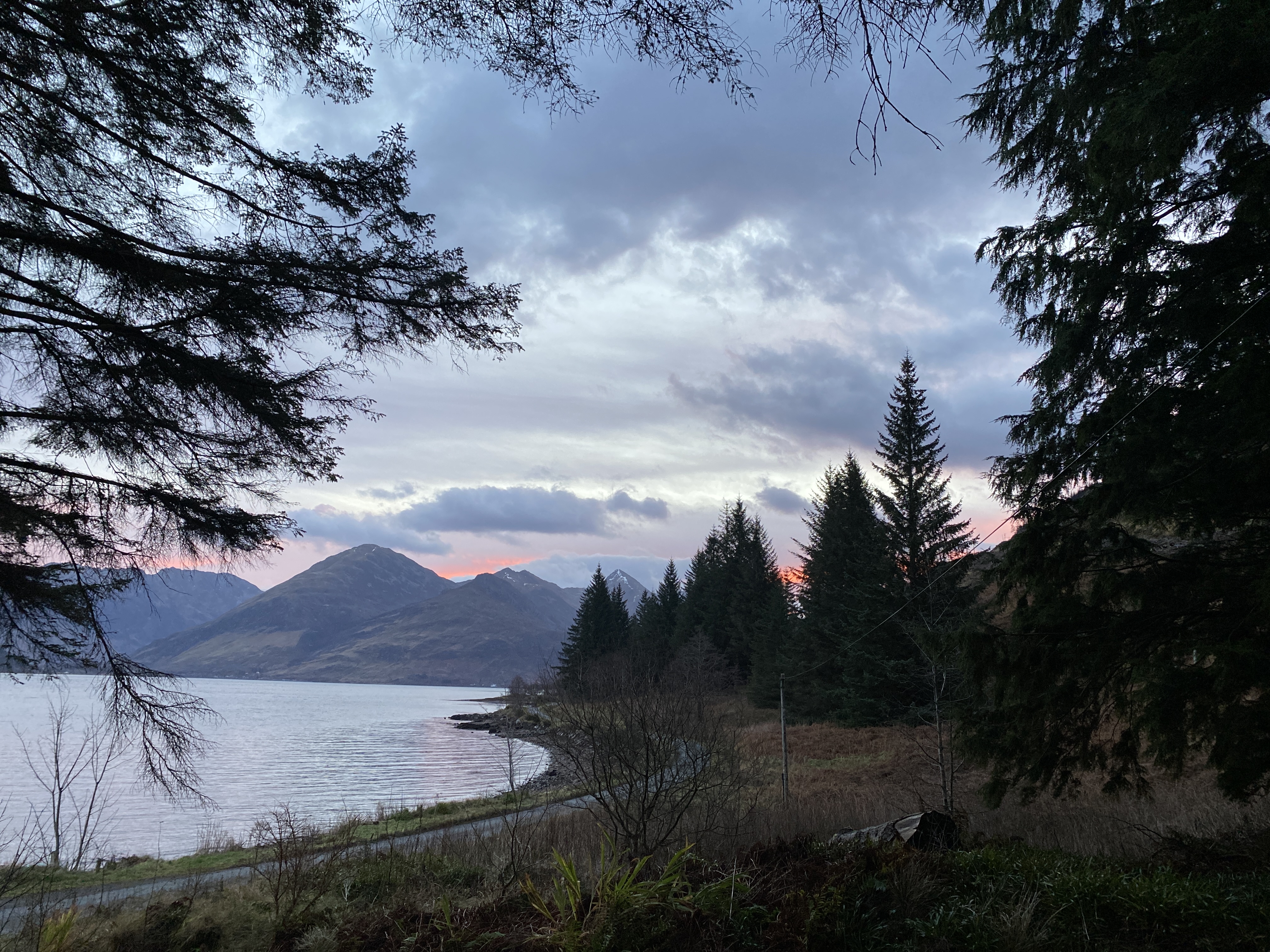
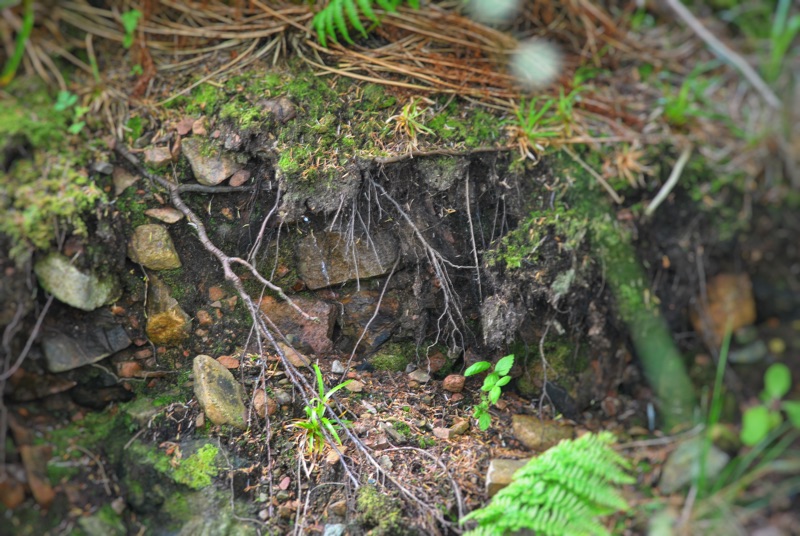
Lost sacred spaces, though no longer marked by physical structures or known rituals, often retain their sanctity. These forgotten or hidden sites, once hallowed by tradition or blessing, continue to hold spiritual significance. Even without visible sanctuaries or shrines, they may still evoke reverence and inspire meditation. The spiritual energy imbued in these spaces, whether remembered or rediscovered, can persist, making them places of quiet reflection or personal pilgrimage. Despite their obscurity or decay, such lost sacred grounds remain part of cultural and spiritual heritage, reminding us that sacredness transcends physical presence and time.
Unfortunately, a project called Seinn Spioradail, which explored Gaelic sacred song traditions in the Highlands and Islands, brought no results in relation to St Kentigerna. Although female saints are rare in this region and a connection would have been plausible, no surviving link through song or oral tradition could be found.
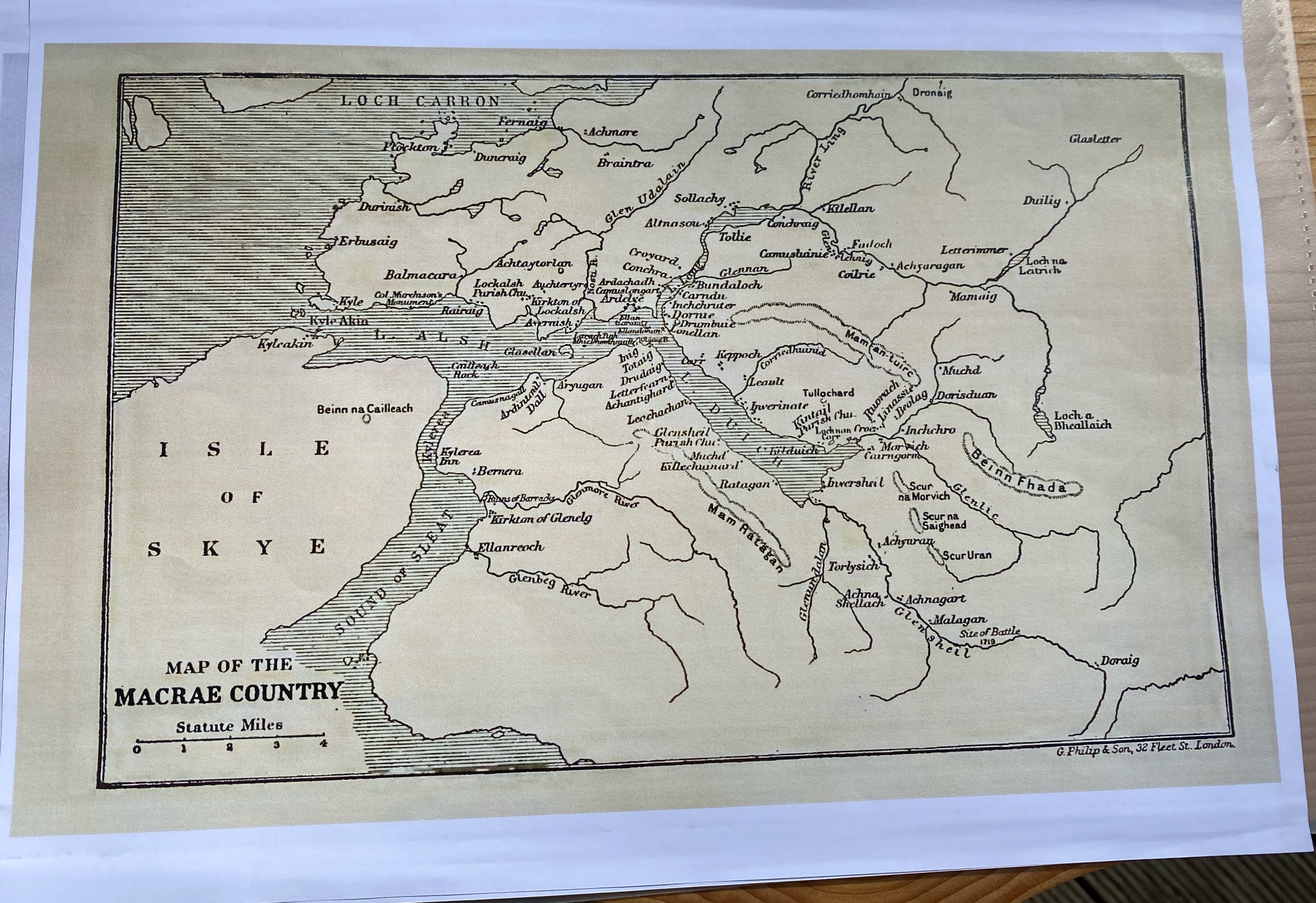
The Chapel and Graveyard: Tracing Hidden Roots
The archaeological assessment of the area emphasizes the historical significance of the suggested site for Cill a’ Chaoin-tearn. The report from April 6, 2000, underscores the importance of protecting the archaeological record during nearby developments, such as pipeline work. This includes marking known features to prevent accidental damage and adjusting project routes where feasible.
Archaeological evidence shows human activity in the Loch Duich region from the Late Neolithic period onwards, highlighted by the henge at Shiel Bridge and rock carvings at Carr. The Bronze Age is marked by hut circles and the standing stone at Shiel Bridge, while the Iron Age is represented by defensive structures like the Caisteal Grugaig broch and duns such as the Bard’s Castle. Notably, the early Christian period is represented by the association of certain sites with the names of early Celtic saints such as St. Kentigerna and St. Dubhthach, the latter reputedly giving his name to Loch Duich. This highlights the deep-rooted spiritual significance of the region. The earliest record of settlement around Loch Duich mentioning Cill a’ Chaoin-tearn dates back to 1543, adding to its historical intrigue.
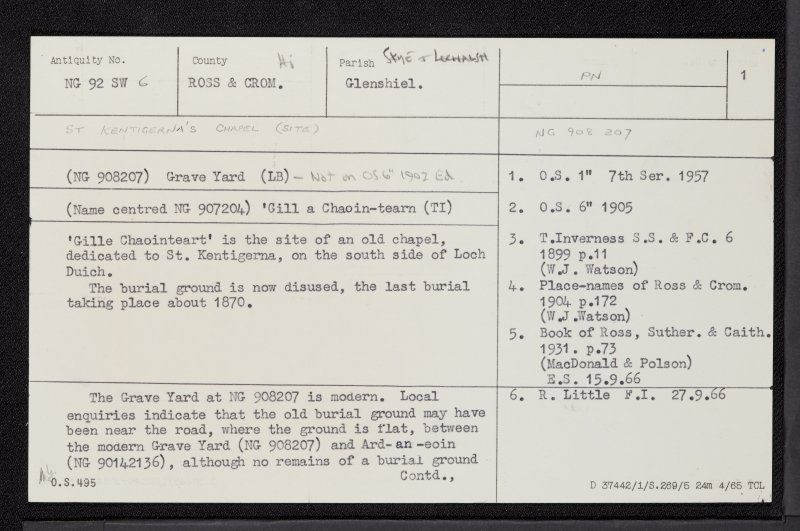
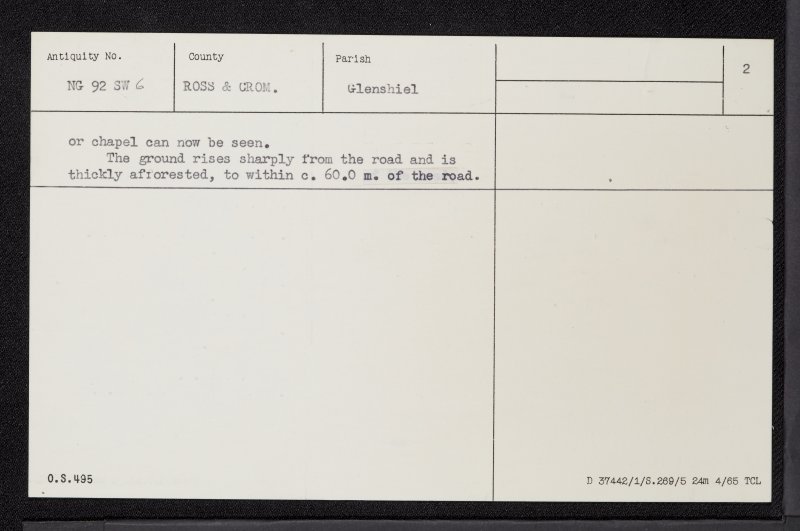
source: Canmore/Historic Environment Scotland (HES)
The assessment further notes that while no definitive remains of Cill a’ Chaoin-tearn have been identified, the flat area between Ard Dearg and Ard-an-eoin remains a plausible location. The last burial recorded in this area was around 1870. Features such as enclosures and dykes, identified in the survey, may not conclusively indicate the chapel’s site but merit archaeological monitoring during any excavation or land work. Taking all this into consideration the flat land between the modern graveyard and Saraig seems the most likely location.
A Call for Local Knowledge
Local knowledge could be key to uncovering this lost piece of Highland history. If you’ve heard stories, seen old maps mentioning Cill a’ Chaoin-tearn, or spotted unusual structures around the Saraig area, these details could be invaluable. This site, if rediscovered, would not only reveal the forgotten chapel and graveyard but also reaffirm the influence of St. Kentigerna and her family on the spiritual landscape of Loch Duich going back almost 500 years.
Why This Matters
The rediscovery of St. Kentigerna’s burial site and the nearby connections to St. Fillan would offer a unique opportunity to reconnect Loch Duich with its rich spiritual heritage. These saints were more than historical figures—they embodied the early Christian spirit that shaped the Highlands. If you have any leads, memories, or photographs that could aid in locating the graveyard, please share them. Together, we may rediscover and preserve an essential chapter of Scotland’s past, honouring the legacy that still resonates along the shores of Loch Duich.
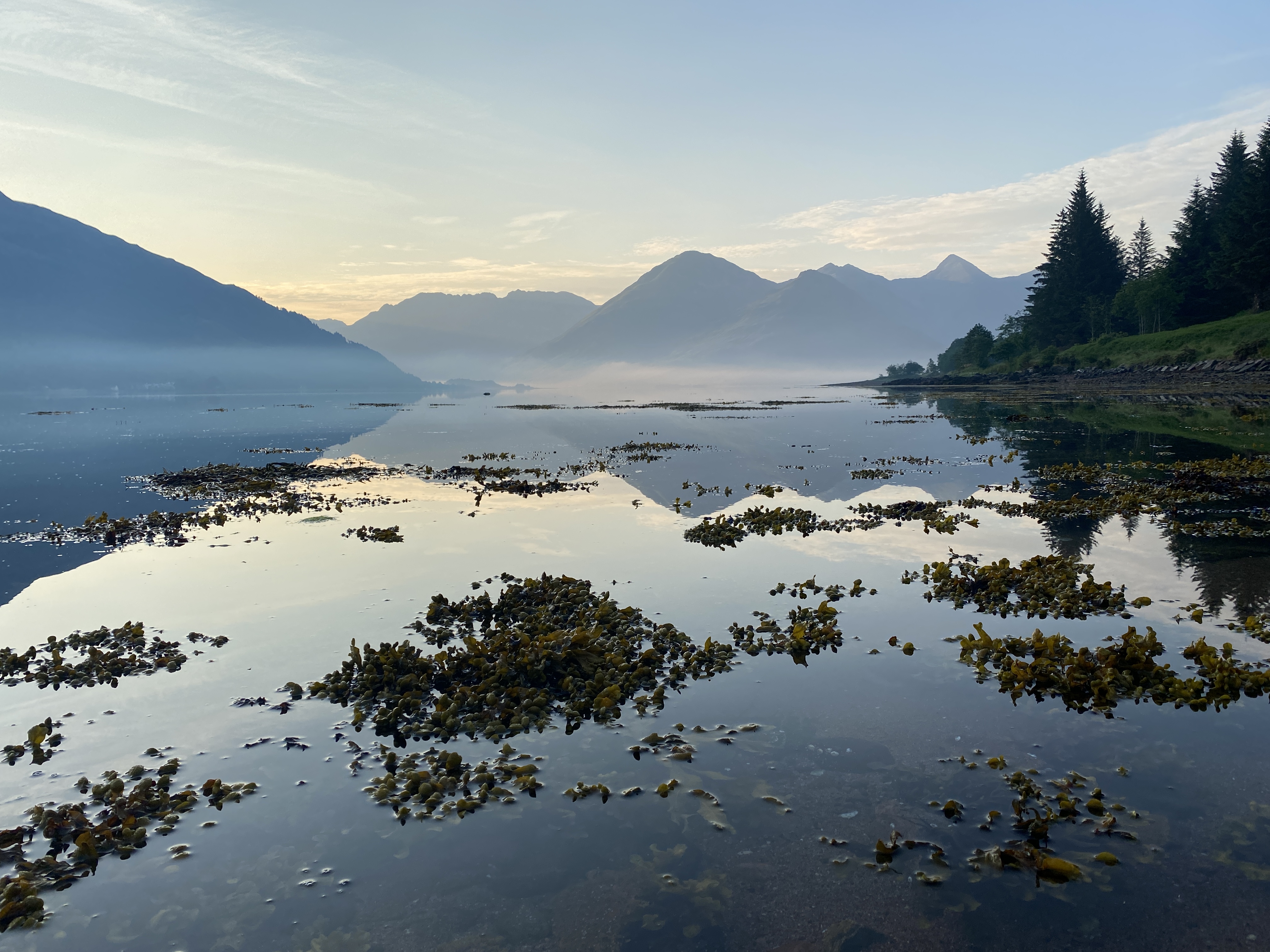
A heartfelt thank you to Historic Environment Scotland (HES) for providing invaluable information and granting permission to use photographs from the Canmore site. Your support has greatly enriched this post, and I deeply appreciate the resources you make available to help bring Scotland’s heritage to life.


 Graveyards of Scotland