

St Mary’s Chapelyard, Crosskirk

The ruins of St Mary’s chapel are old, very likely is this the oldest church building in the whole of Scotland. Because of its simplicity, the chapel is difficult to date. Furthermore, it is closer in style to religious buildings in Orkney and Norway than to contemporary ones in Scotland. Even though Caithness was recognized as a part of Scotland by Norway in the 12th century, the cultural ties remained strong.
The ruin sits beautifully in the rugged coastline of Caithness, an ancient marker of faith.

history and archaeology
St Mary’s Chapel was probably built in the 1100s, though the religious significance of the site may date back further. Two long-cist burials were found on its grounds during excavation, and a Pictish symbol-stone is said to have been found nearby.
Crosskirk is situated on the north coast of Caithness. It comprises the roofless remains of the medieval chapel of St Mary (later adapted as two burial enclosures) lying east-west within a square burial ground. Adjacent, but rejected for guardianship in the early 1960s, are the excavated and now largely destroyed remains of a fort, broch and external settlement (these are part of the scheduled area, however).


The burial ground is enclosed by a stone wall; it contains a large number of gravestones. An unpublished graveyard survey was undertaken in 1985 by Kirkdale Archaeology for Historic Scotland. The gravestones (earliest dated 1692) are of great potential social interest for their genealogical and historical information. The graveyard is no longer used for burials.

situation and context
Views are spectacular and the nearby wind turbines connect this ancient place to modern days. The kirkyard is reached after a short and beautiful if mostly windy walk. A holy well with healing qualities could be found 300m to the south. It was dedicated to St Mary. Hence the dedication of the church.
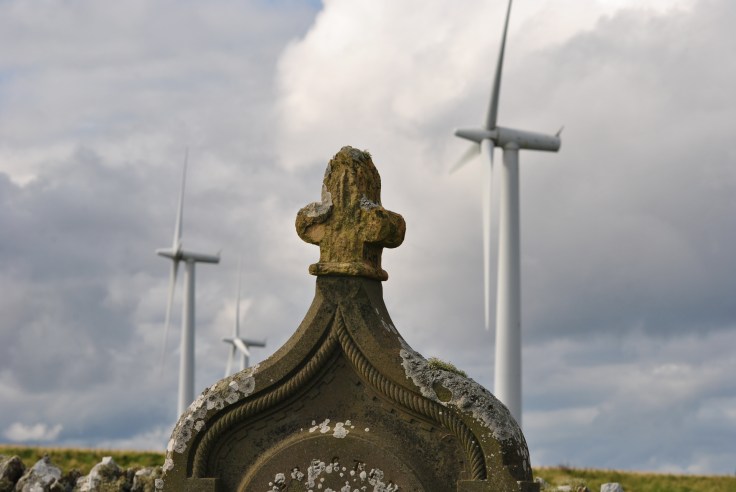
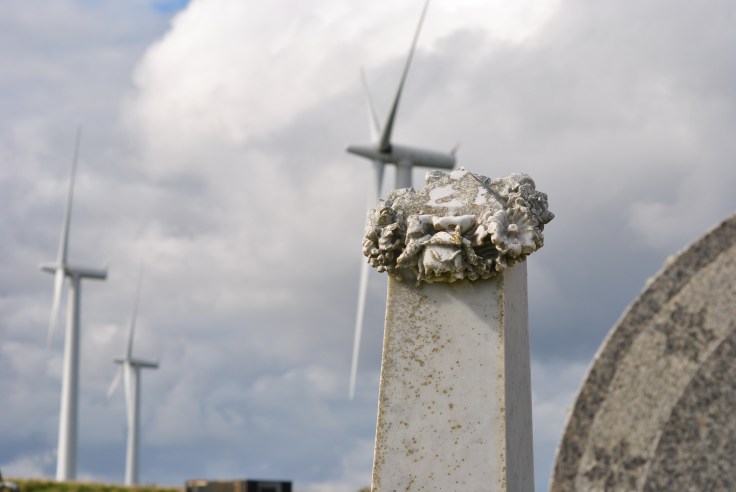


St Mary’s Chapel was a dependent chapel within the parish of Reay. (…) No evidence has been found of an earlier Christian/early medieval foundation within the present graveyard, but a Pictish symbol-incised stone is reported to have been found in the area, and excavations recovered two long-cist burials. (…) This area may therefore include an early burial ground/place of religious significance. The association of early medieval chapel sites with broch sites is an observed phenomenon elsewhere, e.g. in Orkney, and is interpreted in various ways that include there being a close relationship between the religious and secular elite.
An interesting thought by Historic Environment Scotland. If this was already a burial site before the build of the chapel – then graves have been dug here for over a thousand years, which means local families might go back more than 40 generations.

source and further reading: http://www.historicenvironment.scot
Liked the read? There’s more here…
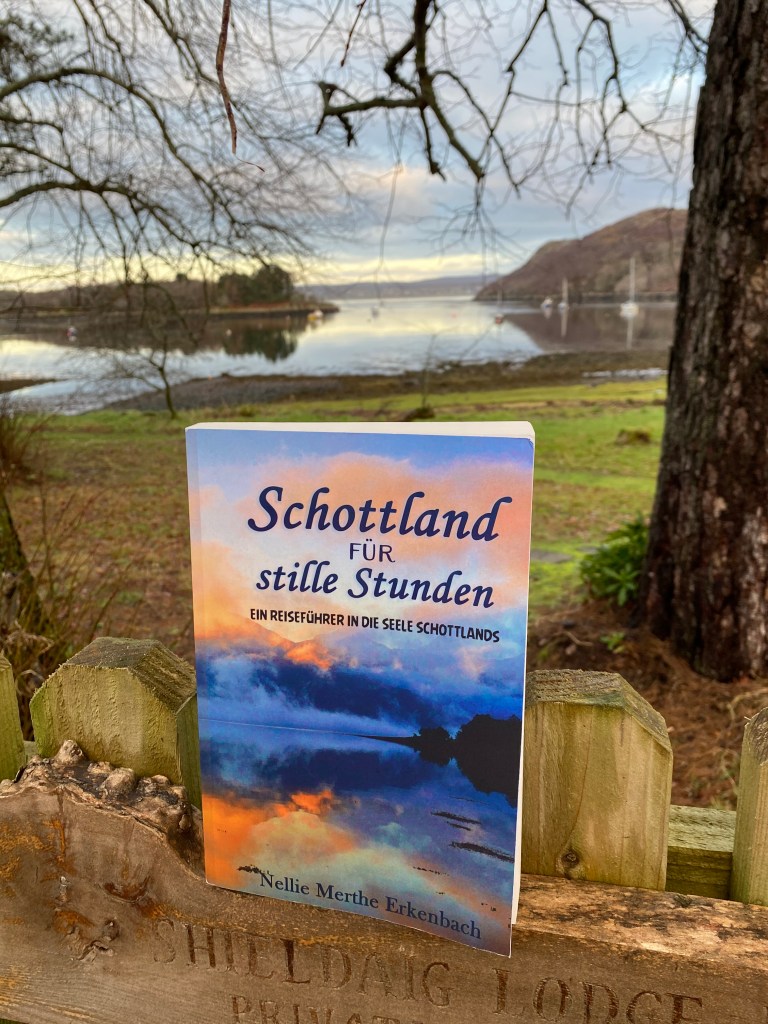
The stories of this book have been discovered and gathered for my blog, Graveyards of Scotland, over many years. Find treasure all over Scotland with my latest book. I am Nellie Merthe Erkenbach, journalist and author.The fairy hill in Inverness, a nitrate murder on Shetland, a family of left-handers, wolves, Robert the Bruce and William Wallace shown in a new light, the secret bay of the writer Gavin Maxwell, a murdering poet and so many things you didn’t know about Scotland, its clans and its history.
My main sources were historical travel guides from the 18th and 19th centuries, where the finds were scary, beautiful, funny, and sometimes, cruel.
This unusual approach to a country’s history has produced amazing results. You don’t have to share my passion for cemeteries to enjoy this book; only a small number of the stories in this collection take place in graveyards, though they do all end in them, so perhaps it helps.


 Graveyards of Scotland
Leave a comment