Bane, bone and stone

This is a graveyard well worth visiting, because of the view of the Sound of Gigha, because of the abundance of beautiful old headstones and because this is an ancient place of worship, established 800 years ago in 1222. A few years later Alexander II gave it to the bishoprick of Argyll.

the horrors of Lindores Abbey

Lindores Abbey is now not more than a few crumbling walls. However, signs within the romantic ruin point to a darker past. Many a death has occurred here. Many bodies were take to this place. This was once a graveyard to the rich, the famous and the ill-fated. These are the horrors of Lindores Abbey.

Dunino’s pagan past

Dunino church is ancient and has been an ancient place of worship. In the long past days of old Celtic faith, a stone circle marked forgotten rites. It was, as have been many Celtic customs, incorporated into the church. But there are more traces of the past to be found here and more intriguing ones at that.

The Battle of Prestonpans

Scottish battles, like many other battles, scarred the nation’s memory for a number of reasons: many losses suffered on one or both sides, the exploits of individuals, or the length of time they raged. Prestonpans was one of the shortest battles in Scottish history, lasting just under ten minutes.

The Gaelic Chapel – an ambiguous gesture

It is an impressive ruin, a reminder of Cromarty's past and the people that lived in it. There are others in Scotland, one in Glasgow and one in Aberdeen, all built for the Gaelic speaking community that had arrived in these places after being cleared out of their Highland homes. They were Gaelic speakers and found themselves in places where Gaelic wasn't spoken. The Gaelic Chapel was a kind gesture to the Gaelic speaking Highlanders who had come to Cromarty. It was financed by exploiting people and nature in the colonies. However, it did not last long and is now a ruin.

a traditional Highland funeral

Christina Cochran Blacklock’s funeral was the last traditional Highland funeral in the Kingairloch district. On Christmas Day 1924, Christina Cochran, nee Blacklock, died in Fort William at the age of 82. She had survived her husband, master mariner Alexander Cochran, her daughter Helen and her son James Duncan. Her granddaughter died a few years after the grandmother. Her grandson, Rev Henry Dyall, did not attend the funeral, but he had often heard the accounts of family and neighbours.

when darkness slowly spreads its wings

Because of its proximity to the sea and the staggering beauty of the maltitude of skulls and crossbones on the table stones, St Regulus graveyard is sometimes called the pirates' graveyard. There is, however, no evidence of pirates buried here. It is nevertheless an amazing place of rememberance and well worth a visit.

finding graveyards in Lochaber

ve often benefitted from references in old guidebooks from the 18th and 19th century, especially when it comes to disused graveyards and burial grounds, but that approach can be problematic as well, since the topography has obviously changed considerably in many areas in the last 300 years.

Fatal Glen Nevis

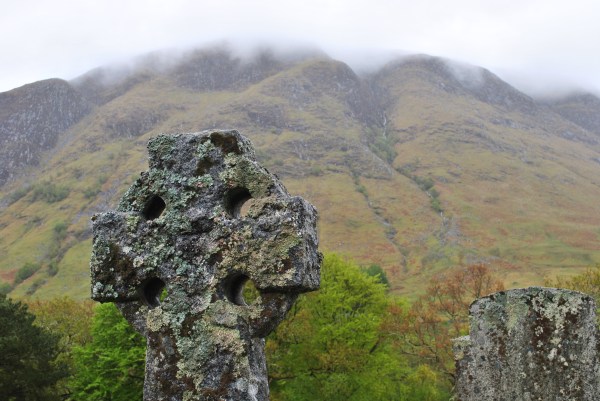
The list is long. So many have died in this area. They perished hiking, driving, training. They died on Ben Nevis, in Glen Nevis and in the surrounding area. They died rock climbing, in avalanches, falling from ridges, crashing into mountains with planes, they were struck by lightning, they drowned, they were killed by explosions. Some of those are buried in Glen Nevis cemetery opposite the Glen Nevis Visitors Center. Helicopters and mountain range rescue teams are operating all year round.

killed by his own clan

This is a beautiful story of family, power and death and as so many Scottish clan stories, it does not come with a happy ending. the young pretender There was once a young man, the youngest son of Allan MacDonald, 4th Chief of Clanranald, who died in 1505. His name was Ranald and he was... Continue Reading →

Blog at WordPress.com.

Up ↑