

Welcome to another installment of “Graveyards of Scotland,” where we uncover the fascinating histories of Scotland’s burial sites. Today, we journey to the picturesque Isle of Arran, home to the pretty village of Lochranza and the storied St. Bride’s Church graveyard.
A Glimpse into History
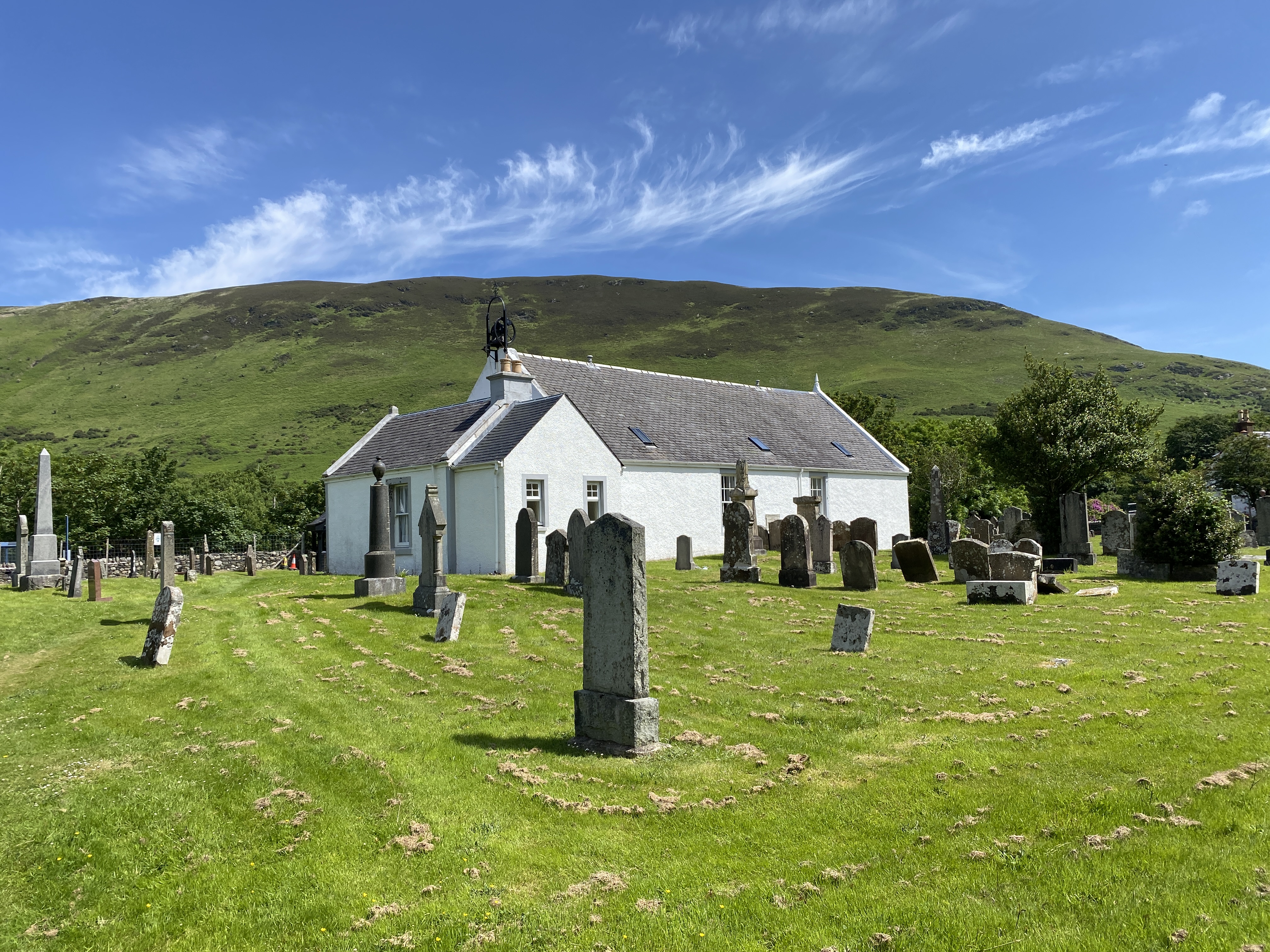
Lochranza, nestled on the northern tip of the Isle of Arran, is known for its breathtaking scenery and rich history. The village is dominated by the imposing ruins of Lochranza Castle, but just as captivating is St. Bride’s Church and its surrounding graveyard.
St. Bride’s Church, often referred to as Achadh an Teampuill (Field of the Temple), has been a site of worship for centuries. The current church structure dates back to 1795, but the site itself has likely been used for religious purposes since the early medieval period. This is showed by the presence of ancient stones and the long history of ecclesiastical activity in the area.
The Graveyard
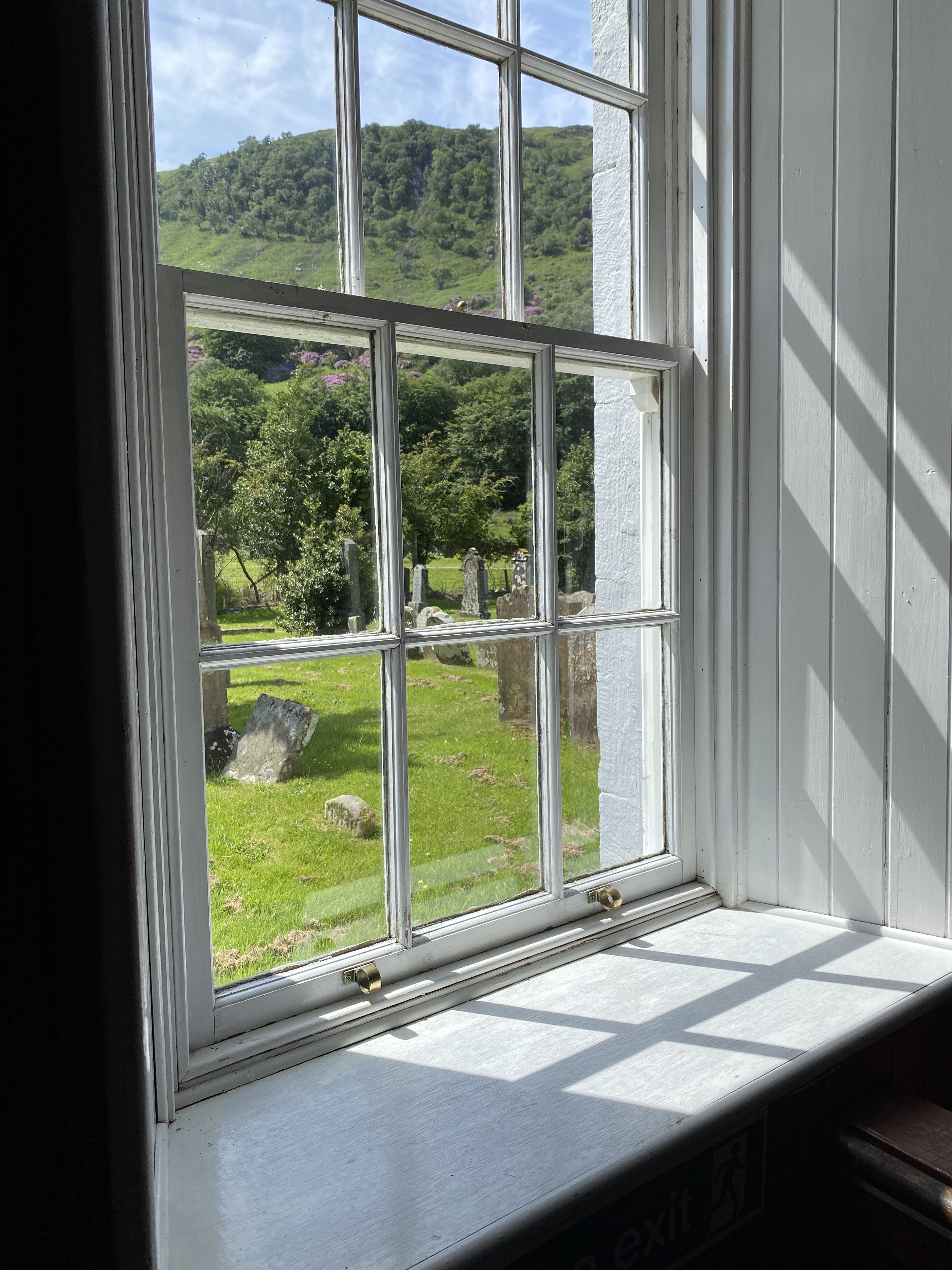
The graveyard of St. Bride’s Church is a tranquil and poignant place, offering a glimpse into the lives of the people who lived in Lochranza over the centuries. It is home to several gravestones that date back to the 17th century, with some even older, reflecting the long history of this sacred ground. Notably, a stone dating to 1712 can be found on the church’s east wall, and other stones bear dates from 1675 and 1680
One particularly intriguing feature is a narrow slab adorned with a fine design of Celtic knotwork, the only one of its kind found on Arran. This slab, located a few feet in front of the church’s east gable, is a remarkable example of early Christian artistry in the region.

Stories from the Past
The graveyard holds many stories of the past. For instance, it is believed that the site may have been dedicated to St. James originally, with later dedications to St. Bride, reflecting the evolving religious affiliations over time. The local lore and historical records suggest that the church has been a focal point of the community, witnessing countless events and changes through the centuries.
Archaeological Findings
In recent years, archaeological excavations have uncovered more about the site’s history. During groundwork for a new church annex in 2011, disarticulated human bones were found, believed to be from the 17th or 18th century. These remains were likely disturbed during previous construction efforts. Additionally, fragments of prehistoric pottery were discovered, indicating that the site may have been significant long before the medieval period.
Sources:


 Graveyards of Scotland
Leave a comment