
Campbeltown Cross has a special place in the hearts of the local community, a respect observed regularly by its circumnavigation prior to all weddings and funerals.
Campbeltown Cross

Campbeltown Cross has a special place in the hearts of the local community, a respect observed regularly by its circumnavigation prior to all weddings and funerals.

Most of the headstones are indecipherable now. Time has taken its toll amongst the engravings. But there is one war grave among the withered stones, to the memory of John William Campbell of the Royal Engineers, who died January 3rd, 1944, at the age of 27. A man mourned by his family and friends in this remote and scarcely populated part of the country close to the river Thurso.

This place is so absolutely not what it looks like and bears far more depth, surprises and secrets than most of the graveyards I have been to in Scotland. And believe me, I have been to a lot.

Sutherland, who had some presentiment that he would never return, stretched himself on the ground in the old churchyard of Berriedale before setting out, and caused two stones to be fixed, the one at his head and the other at his feet, which were to be seen for ages after but are not to be distinguished any more.
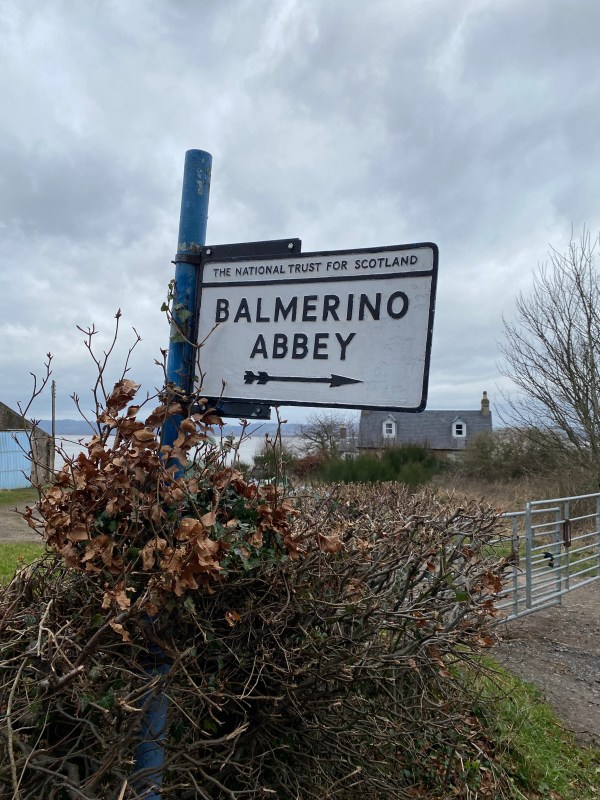
Balmerino Abbey was founded by a woman who is believed to be buried here: Queen Ermengarde de Beaumont, not a “normal” woman by any standards. The Abbey is in a bad state and there is not much left of its original power and impressive architecture, nothing but the faint memory of people and their stories in a long gone past. Ermengarde was born in 1170 and died in her early sixties, a long life in the 12th century. She was married to King William I of Scotland at the age of 16. The marriage took place in England, Henry II was overlord of Scotland at the time. Her husband had been a notorious womaniser before his marriage but was said to have been faithful to his extraordinary woman and wife ever since the marriage vows. Her husband founded an Abbey in Arbroath where about 14 years later he was laid to rest. Ermengarde, who survived her husband by 20 years, was not buried next to him, but here, in her Abbey, in Balmerino.
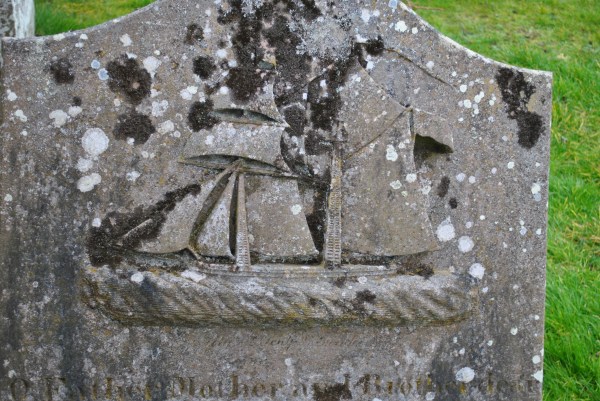
Balmerino Cemetery Oh father mother and brother dear Weep not for us though sleeping here For in one time we think to rise And strive to gain the glorious prize. Fishermen, sailors, merchants and workers in the fish industry – the people of Fife have always had a special relationship to the sea. Not surprising... Continue Reading →
Preview in new tab Aberlady's history Aberlady goes back a long way. There are no signs of any Roman setlements. However, it appears that there was an Iron Age settlement taking advantage of the sheltered coastal location provided by the bay. Aberlady also has a long history of smuggling. Archaeological findings support the theory that... Continue Reading →
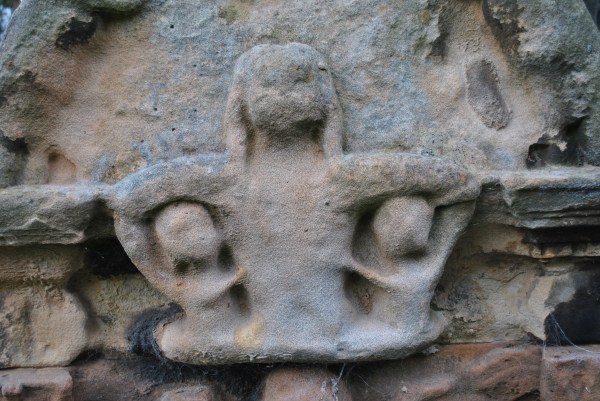
Many cruel and misogynist tale has been told from the past ages. The story of Theneu seems particularly cruel. A father trying to kill his pregnant daughter. He fails, tries another way and she ends up giving birth alone on a boat in the North Sea. Usually, the story focuses either o the father, because he was Loth, a powerful king. Or on the son she bore, who became a famous saint: St Kentigern of Glasgow.

the issue with the issue The descendants of Sir James continued to possess property in the area for centuries but by the 19th century the family was entirely extinct in the male line. This was even more remarkable, as Sir Michael lived to see 300 of his own issue, while Sir Andrew, his youngest son, saw 600 descendants from his father. In the aisle of the old church of Abdie, there are mural tablets, erected to the memory of Sir James Balfour, and his father Sir Michael; and here, or in the adjoining churchyard, they were both interred.

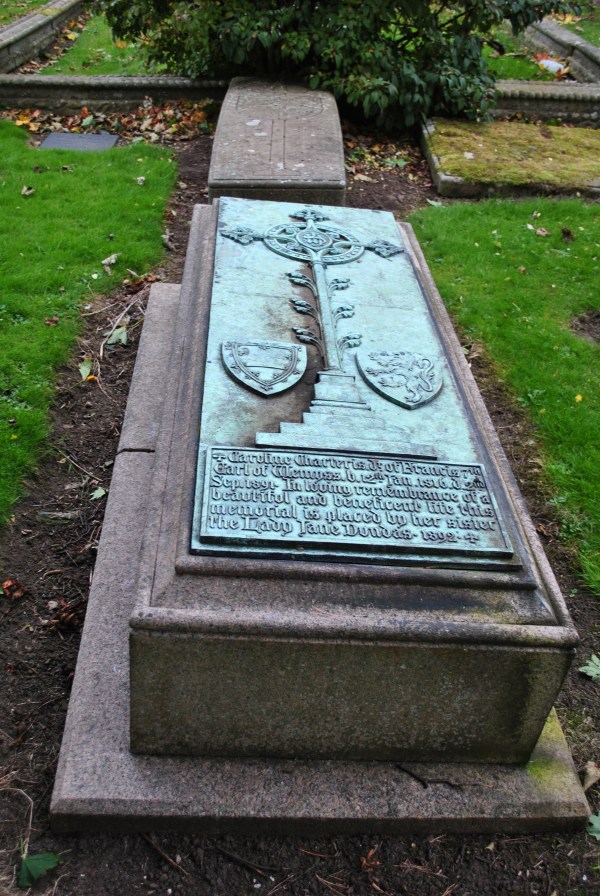
The austere pyramid is an unusual sight and certainly an uncommon style for am mausoleum in Scotland. The reason being not an architectural fancy or fashion but the stong faith of its creator - Francis Wemyss Charteris was a Freemason The mausoleum was built between 1795 and 1798. Thomas Harrison of Lancaster assisted. It was a precicely thought through built. The look of simplicity is devceiving, there is more to it than meets the eye. Tributes have been paid to Masonic symbology, numerology and geometry. Here are just a few examples.

Lindisfarne graveyard on Holy Island, Northumberland, symbolizes centuries of faith and history, overlooking Lindisfarne Priory’s ruins. A significant site since the 7th century, it holds the remains of islanders and clergy. The graveyard fosters reflection and connection to St Cuthbert, attracting visitors seeking inspiration and tranquility amid a sacred legacy.
Bamburgh, with its dramatic coastal setting and rich history, has revealed yet another fascinating chapter of its past. Decades of dedicated research by the Bamburgh Research Project and Durham University, in collaboration with the Bamburgh Castle Estate, have shed light on the lives of Anglo-Saxons who inhabited this area over a thousand years ago. The […]

Grace Darling, born in 1815, became famous for her courageous sea rescue of Forfarshire survivors in 1838. She passed away in 1842 and is buried in Bamburgh, where a monument marks her legacy. Celebrated in literature and art, her story inspires future generations, symbolizing bravery and compassion.
 Graveyards of Scotland
Recent Comments